
Why Ground-Level Checks Matter After a Georgia Storm
Coweta County and the towns around it, Sharpsburg, Peachtree City, Senoia, see their share of fast-moving spring and summer storms that drop hail somewhere between pea size and golf ball size. Most homeowners never see the storm hit their roof directly, they hear it on the car or the deck and then spend the next few days wondering if anything actually happened up top. A ground-level check is the fastest way to decide whether that worry is worth acting on.
The idea isn't to diagnose your roof completely from the yard, it's to gather the clues that tell you whether a closer look is worth scheduling. Hail hits every exposed surface on your property at roughly the same force, so what you find on your gutters, vents, and AC unit is a reasonable stand-in for what likely happened on the shingles you can't see as easily.
How Hail Actually Damages a Roof
Hail doesn't punch through a shingle the way a lot of people picture it. Instead it bruises the mat underneath the surface granules, a soft spot that compresses on impact and loses some of its structural integrity even though the shingle looks mostly intact from a few feet away. That bruise is where water eventually works its way in, often a full season or two after the storm that caused it.
What Happens to Asphalt Shingles
A hailstone striking an asphalt shingle can knock loose the protective granules on impact, leaving a lighter, rougher patch where the asphalt mat underneath is now exposed to direct sun and rain. Depending on the size and speed of the hail, it can also crack the mat itself, which is the kind of damage that doesn't always show up as a visible hole right away.
Granule loss concentrated in one area, rather than spread evenly across the whole slope, is one of the clearer signs an inspector looks for. A few random missing granules from age and weather is normal. A cluster of bare, dark spots after a specific storm is the pattern that matters.
What Happens to Soft Metal and Accessories
Soft metal dents more visibly and more consistently than shingles do, which is exactly why it's so useful for a ground check. Gutters, downspouts, roof vents, and window screens all take hail impacts the same way a car hood does, with small round dimples you can usually spot without climbing anything.
If your gutters, vents, or AC unit show fresh dents after a storm, it's a strong signal the roof surface took hits of similar force. It isn't proof of roof damage on its own, but it's the kind of evidence that makes scheduling a closer look worth the time.
| What You See | Likely Cause | What It Means |
|---|---|---|
| Round dents in gutters or downspouts | Hail impact on soft aluminum | Good reason to have the roof checked |
| Bent or dinged roof vents and flashing caps | Direct hail strikes on exposed metal | Suggests similar force hit the shingles nearby |
| Granules piling in downspouts after a storm | Shingle surface stripped by impact | Worth a closer inspection of that slope |
| Dented AC fins or torn window screens | Hail size large enough to bruise shingles | Strong indicator roof damage is likely |
The Soft Metal and Surfaces Worth Checking First
Before you even think about the roof itself, walk the perimeter of the house and look at everything made of thin metal or screen. These surfaces dent and tear far more easily than shingles, so they're the first thing to show damage and the easiest to check safely from the ground.
Gutters and downspouts are usually the clearest tell. Fresh dents look different from old wear, they're sharper, rounder, and often clustered on the side of the house the storm came from. Pair that with a check of any gutters that run along the roofline, since hail that's hard enough to dent aluminum gutters is hard enough to bruise the shingles just above them.
Step-by-Step: Checking for Hail Damage Without a Ladder
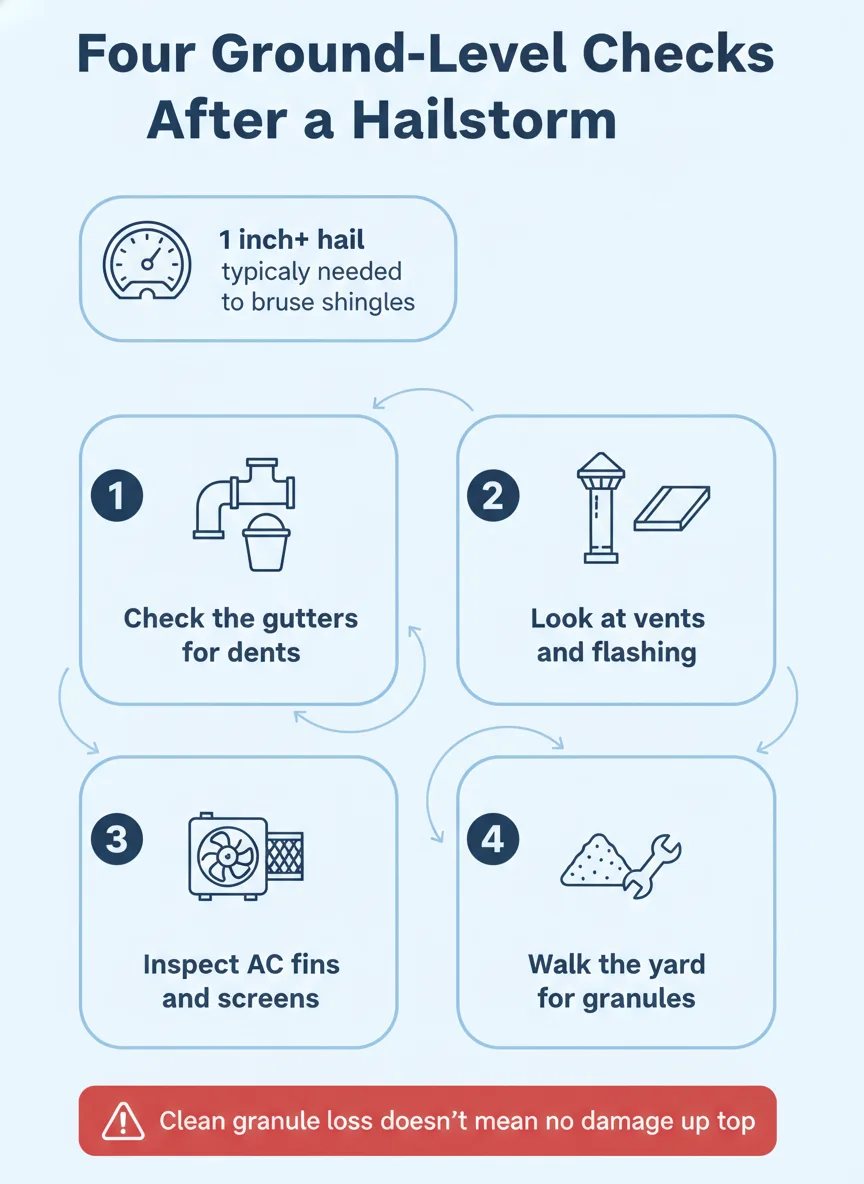
Work your way around the outside of the house in a set order so you don't miss a section. Bring a flashlight for shaded areas and take photos of anything that looks fresh, dated photos are useful if you decide to have someone come out and look closer.
- Check the gutters: Walk the gutter line looking for round dents, dings, or bent sections, especially on the side of the house that faced the storm.
- Look at vents and caps: Scan roof vents, plumbing stacks, and any visible flashing caps for dents or knocked loose pieces you can see from the yard.
- Inspect the AC unit: Dented fins on an outdoor condenser are a strong sign hail large enough to matter came through the area.
- Check window and porch screens: Torn or punctured screens on the storm-facing side of the house point to hail with real force behind it.
- Walk the downspouts: Granules piling up where water exits a downspout after a storm usually mean the shingle surface above took some impact.
- Check siding and trim: Dents or chips in vinyl or wood trim on the exposed side of the house confirm the storm hit that side hardest.
- Photograph everything: Snap pictures with a date stamp of anything unusual so you have a record before weather changes it further.
What Your Findings Usually Mean
Once you've walked the house, you'll generally land in one of two camps: either you found nothing unusual anywhere, or you found at least a few dents or missing granules worth asking about. Both outcomes are useful information, and neither one is a final diagnosis on its own.
If You Found Nothing Unusual
A clean check doesn't completely rule out roof damage, but it does lower the odds that anything significant happened. Smaller hail, under an inch or so, often doesn't leave marks on metal or screens even when it does strip a few granules off shingles here and there. If your gutters and vents are untouched, keep an eye out but there's less urgency to act right away.
If You Found Dents or Missing Granules
Any clustered dents on metal or a noticeable pile of granules after a storm is worth following up on with a roof inspection. Our team can get on the roof, photograph the specific spots that match what you found at ground level, and give you a straight answer on whether repair or a storm damage inspection and insurance claim makes sense.
DIY Checks vs. Calling in a Roofer
Everything in this guide is safe to do from the ground with your own two eyes, a flashlight, and a phone camera. There's no reason to get on a ladder or walk the roof yourself, and honestly, doing so right after a hailstorm is one of the more common ways homeowners get hurt or cause more damage by stepping on weakened shingles.
Where a professional comes in is confirming what the ground-level clues suggest. A trained eye can tell the difference between normal wear and fresh hail bruising on a shingle, something that's genuinely hard to judge from a photo taken at an angle from the yard. That distinction matters most if you're deciding whether to file an insurance claim.
If you're unsure whether what you found warrants a call, err on the side of asking. A free inspection costs you nothing but a little time, and it settles the question with photos and a clear answer instead of guesswork. For related reading on what comes after a wind event specifically, see our post on missing shingles after a windstorm.
Getting a Second Opinion in Coweta County
Hail doesn't hit every house in a neighborhood the same way, it depends on which direction your roof faces, how exposed it is to trees, and even which slope caught the worst of the wind-driven angle. That's why two houses on the same street can have very different outcomes from the same storm, and why a ground check at your own house is worth doing even if your neighbor's roof looks fine.
If your walk-around turned up dented gutters, chipped vents, or a pile of granules you didn't expect, it's reasonable to get a professional look before deciding what to do next. Griffintegrity Roof & Remod has been inspecting storm damage across Coweta County and the south side of metro Atlanta for 10 years, and a free, no-pressure look at your roof is the clearest way to know where you actually stand.
Frequently asked questions
Can you tell if your roof has hail damage without getting on it?
You can find strong clues from the ground, but you can't confirm the full picture without a closer look up top. Dented gutters, dinged vents, and granules in your downspouts are good reasons to get an inspection, not a final verdict on their own.
What size hail actually damages a roof?
Hail generally needs to be at least an inch across, roughly quarter-sized, before it starts bruising shingles or denting soft metal. Smaller hail can still strip granules or ding gutters, especially if wind drove it sideways into the roof at an angle.
Why does hail damage sometimes not show up for months?
A hail strike can crack the protective mat inside a shingle without breaking the surface open right away. The spot weakens first and only turns into a visible leak or a soft patch once sun and rain work on it over several more storms.
Does a few missing granules in the gutter mean the roof needs replacing?
Not by itself. Shingles naturally shed some granules over their life, so a light dusting in the gutter is normal; it's a heavy, sudden pile right after a hailstorm that's worth having someone look at.
Who should I call first after I suspect hail damage, my insurer or a roofer?
Most homeowners start with a roofing contractor who can document damage with photos before filing anything. That gives you a clear picture of what's actually there before you decide whether a claim makes sense.