
What Happens After a Storm Hits Your Roof in South Metro Atlanta
Coweta County and the towns around it sit in a part of Georgia that sees its share of spring and summer storm systems, and a hard wind or hail event can leave a roof with damage that isn't obvious from the driveway. Once that happens, homeowners are usually dealing with an unfamiliar process on top of an unexpected expense, which is exactly when it helps to know the order things are supposed to happen in.
A roof insurance claim isn't a single phone call. It's a sequence: documentation, notification, inspection, estimate, agreement on scope, the actual work, and a final settlement. Skipping a step or doing things out of order is how homeowners end up with a lowball payout or a drawn-out dispute. Understanding the sequence ahead of time means you walk into each stage knowing what's supposed to happen next.
Why the Insurance Claim Process Follows a Set Order
Insurance companies, adjusters, and contractors all work off the same basic framework because it protects everyone involved, including you. The carrier needs proof the damage happened and what it covers under your policy. The adjuster needs to verify that proof in person. You need an accurate scope of work before anyone touches your roof. Each stage depends on the one before it, which is why rushing or reordering the process tends to backfire.
Documenting the Damage
Before you call anyone, take photos and, if it's safe, video from the ground of any visible damage: dented or missing shingles, dented gutters or vents, debris in the yard. Note the date of the storm if you know it. This documentation becomes the backbone of your claim and gives your adjuster and your contractor a shared starting point.
If you aren't comfortable getting a close look yourself, a roof inspection from a contractor can confirm what's actually going on up there before you make the call to your carrier. Walking in with photos and a professional opinion in hand tends to move the claim along faster than calling with a vague description of 'maybe some damage.'
Calling Your Carrier
Once you've got documentation, you contact your insurance company to open the claim. They'll ask for the basics: when the damage happened, what you've observed, and they'll assign a claim number along with an adjuster. This is also the point where you want to pull out your policy and understand your deductible and coverage type, since that shapes what happens later.
Most carriers schedule the adjuster inspection within a week or two of the call, though that window stretches during periods when a lot of homes in the region file claims at once. Confirm the appointment time and, if you can, have your roofing contractor plan to be there too.
| Actual Cash Value (ACV) | Replacement Cost Value (RCV) | |
|---|---|---|
| What it pays | Depreciated value of the damaged roof at time of loss | Full cost to replace the roof with new materials |
| When you get it | Often issued as the initial payment | Remaining amount released after work is completed, if your policy includes recoverable depreciation |
| What drives it | Age and condition of the roof before the storm | Current cost of materials and labor for a like-kind replacement |
Who Does What: Homeowner, Adjuster, and Contractor
Three parties touch a roof claim, and each has a different job. You, the homeowner, own the decision of which contractor to hire and when to accept a settlement. The adjuster represents the insurance company and is there to verify the damage and estimate the covered cost. The contractor's job is to confirm the scope of work is accurate and complete, flagging anything the adjuster's estimate might have missed, like underlayment or flashing that won't show up in a quick visual pass.
A contractor who's handled insurance work before knows how to speak the adjuster's language, pointing out damage in terms that match how carriers categorize it. That doesn't mean padding the claim. A straightforward contractor tells you plainly if the damage doesn't meet the threshold for a covered claim, and quotes you a repair instead of running you through the insurance process for something minor.
Step-by-Step: The Claim Journey From Storm to New Roof
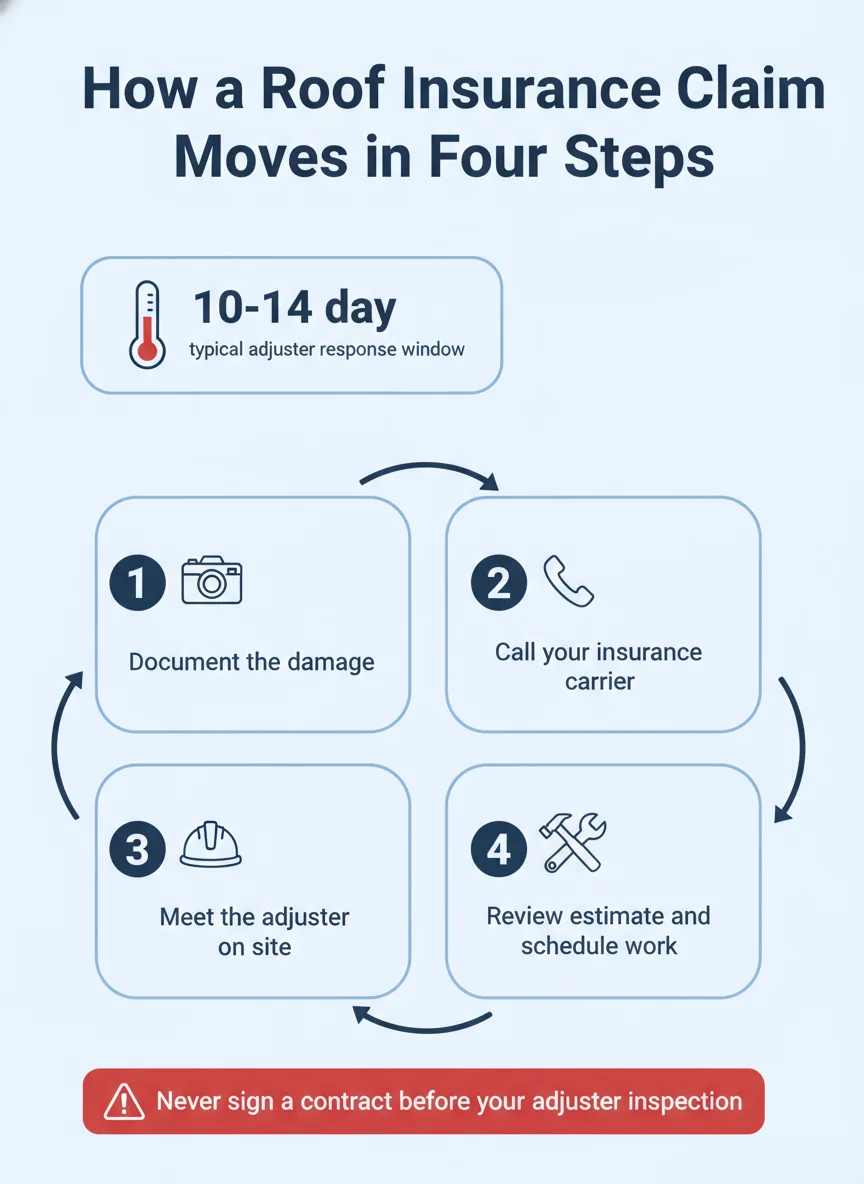
Laid out in order, here's what the full timeline typically looks like once a storm has passed over your home.
- Document the damage: Photograph visible damage from the ground and note the date of the storm before you contact anyone.
- Call your carrier: Open the claim with your insurance company and get your claim number and assigned adjuster.
- Get a contractor's inspection: Have a roofing contractor walk the roof and put together their own written assessment of the damage.
- Adjuster inspection: The adjuster visits the property, ideally with your contractor present, to verify the damage firsthand.
- Review the estimate: The carrier issues a written estimate and initial payment. Compare it against your contractor's assessment for gaps.
- Sign and schedule: Once the scope is agreed on, sign with your chosen contractor and get the work scheduled.
- Final invoice and depreciation: After the work is done, submit the final invoice to release any recoverable depreciation your policy includes.
What You'll Find in the Adjuster's Estimate
Actual Cash Value and Depreciation
Most policies pay out in two parts. The first check reflects the actual cash value, meaning the replacement cost minus depreciation based on your roof's age and condition. If your policy includes recoverable depreciation, the second check arrives after the work is finished and you've submitted the invoice showing the job is complete.
This two-part structure trips up a lot of homeowners who expect one lump sum upfront. It's worth asking your agent directly whether your policy includes recoverable depreciation and under what conditions it gets released, since that answer changes how you budget for the project.
Your Deductible
Your deductible is the amount you're responsible for before insurance coverage kicks in, and it's set by your policy, not by the contractor or the adjuster. A straightforward contractor builds the project around the agreed scope and lets the deductible fall where your policy says it should, rather than making promises about covering it.
Knowing your deductible amount before the adjuster visit helps you understand what your out-of-pocket cost will actually be once the claim settles, separate from whatever the insurance company pays toward the replacement itself.
DIY vs. Calling a Pro: Who Handles What in a Claim
You can and should handle the parts of this process that don't require climbing a ladder: photographing visible damage, calling your carrier, reading your policy's deductible and coverage terms, and keeping a folder of every document that comes through. None of that requires special licensing, just attention and a little patience with phone hold times.
Getting on the roof itself, assessing the full extent of damage, and meeting the adjuster with a technical eye is where a licensed roofing contractor earns their keep. Damage to underlayment, flashing, or decking often isn't visible from a ladder glance, and an adjuster working off a quick visual pass can miss it without someone pointing it out.
The same goes for the actual repair or replacement work once the claim settles. That's licensed, insured work, not a weekend project, and it's the stage where the quality of materials and installation determines whether the new roof lasts as long as it should.
Getting From Storm to New Roof
A roof insurance claim can feel like a maze the first time you go through it, but the order is consistent: document, call, inspect, estimate, build, settle. Knowing what comes next at each stage keeps the process moving and keeps you from feeling like you're guessing. If you're dealing with wind or hail damage right now, it's worth reading through emergency roof tarping in the first 24 hours as well, especially if the damage is active and letting water in.
Homeowners in Newnan and the surrounding towns dealing with storm damage don't have to figure out the claim process alone, and Griffintegrity Roof & Remod has worked alongside homeowners and their adjusters on claims across the region for over a decade.
Frequently asked questions
How long does a roof insurance claim take in Georgia?
It depends on the carrier and the season, but most claims move from first call to adjuster inspection within a couple of weeks, and the full process from storm to finished roof often wraps up within a month or two. Claims filed right after a widespread regional storm can take longer simply because adjusters are backed up.
Do I have to be home for the adjuster inspection?
It helps but isn't always required, since many carriers allow a contractor to meet the adjuster on your behalf. Being present or having your contractor there means someone who knows the full scope of damage is speaking for you.
What is recoverable depreciation on a roof claim?
Recoverable depreciation is the portion of your payout withheld until the work is actually completed, then released once you submit the final invoice. Not every policy includes it, so it's worth checking your specific coverage.
Can a roofing contractor help with my insurance claim?
Yes, a contractor experienced with insurance work can document damage thoroughly and meet your adjuster to make sure nothing gets missed in the estimate. They should never push you to file a claim for damage that doesn't need it.
What happens if my claim gets denied?
A denial isn't always the final word, since you can ask your carrier for a reinspection or get a second opinion from a roofing contractor on whether the damage meets your policy's threshold. Detailed photos and a written estimate from the inspection stage make that conversation much easier.