Hail damage roof repair, made right.
Hail can bruise a roof without leaving an obvious hole, and that damage shortens the life of the roof if it goes unaddressed. We inspect, document, and repair hail damage across Coweta County and the south side of metro Atlanta.
- ★★★★★4.7 on Google
- Licensed & insured
- No obligation
Get a Roof Estimate in 60 Seconds
“My roof got damaged during a storm. I reached out to James Howard, who quickly respond. He come over, assessed the damage and deal with the insurance. Great professional. Roof looks amazing.”
- 10+ years in business, since 2016
- Owens Corning Preferred Contractor
How it works
- 01Free Inspection, Honest Read FreeScott or a project manager gets on the roof, photographs everything, and tells you whether it is a repair, a replacement, or a claim worth filing. No pressure either way.
- 02Clear Written Quote Free QuoteA competitive written quote with your Owens Corning shingle and color options laid out, plus financing if you want it. You know the price before any work starts.
- 03Install Day Often 1 DayOur crew shows up on time with a project manager on site, protects your landscaping, and most homes are re-roofed and cleaned up the same day.
- 04Walkthrough & Follow-Up After the JobWe walk the finished job with you, hand off your warranty paperwork, and Scott follows up afterward to make sure you are satisfied.
Why the timing matters after a storm
Insurance policies have a window to report storm damage, and hail bruising is easiest to document in the first few weeks before weather wears it in. An inspection now costs nothing and gives you dated photos either way.
Griffintegrity Roof & Remod repairs hail damage on homes across Coweta County and the south side of metro Atlanta, from Newnan and Sharpsburg out to Peachtree City and Senoia. Hail damage is easy to miss from the driveway, but it bruises the shingle mat, knocks granules loose, and dents soft metal, and all of that shortens the roof's life if it sits unrepaired. We've handled hail claims for 10 years and we're an Owens Corning Preferred Contractor, so the repair goes back on with materials built to hold up.
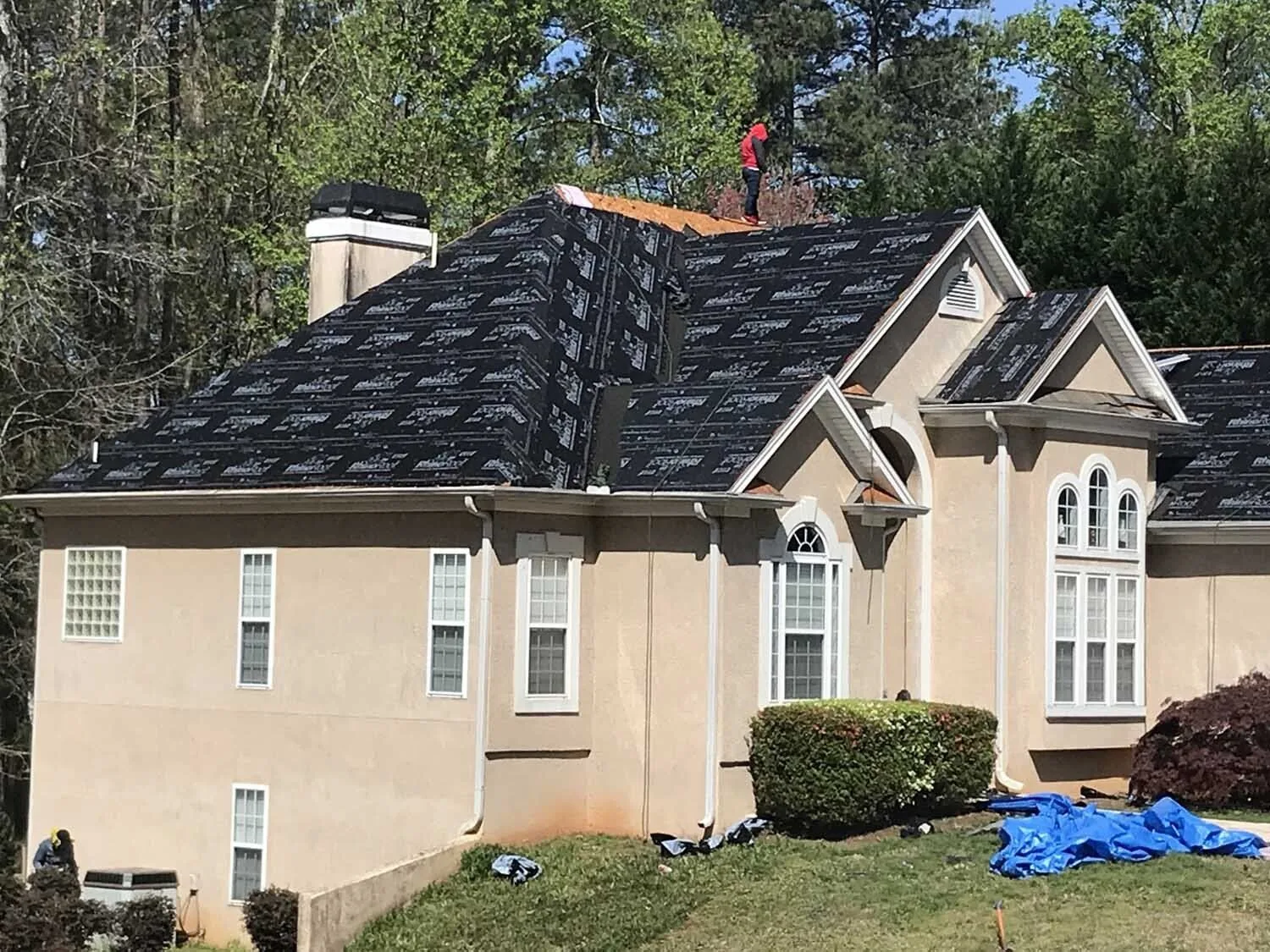
Is hail damage hiding on your Coweta County roof right now?
It might be. Hail rarely punches a hole you can spot from the ground, it bruises the shingle mat and knocks the granules loose, and both weaken the roof without an obvious sign until the next hard rain finds a soft spot. Dented gutters, dented AC fins, and granules piled at the downspouts are the tells most homeowners never think to check. A close inspection on the roof and at the ground-level metal tells you fast whether there's real damage or nothing to worry about.
Warning signs to watch for
Soft spots or dents in the shingle mat
Hail bruises the mat even when it doesn't tear it open. From the ground the roof can look fine, but up close the bruised spots feel soft and the granules over them are gone or thinning.
Granules collecting in the gutters
Every shingle sheds granules that protect it from the sun, and a normal amount is expected over the years. A pile of granules at the downspouts right after a storm is a sign the hail knocked loose more than it should have.
Dented vents, flashing, or gutters
Soft metal dents easier than shingles, so dented roof vents and gutter runs are often the first visible clue that hail hit hard enough to matter. If the metal took a hit, the shingles nearby usually did too.
Creased or torn shingles near the damage
Hail and wind often arrive together, and a creased shingle will not reseal itself. Those creases turn into leaks the next time rain comes in at an angle.
What is causing the problem
Hail size and impact angle
Larger hail bruises deeper and dents more metal, and hail that lands at an angle in high wind does more damage than a straight vertical hit.
Shingle age at the time of the storm
Older, sun-baked shingles bruise and crack more easily than newer ones, since the asphalt has already lost some flexibility.
Granule loss exposing the shingle mat
Once the granules are gone in a spot, the mat underneath is exposed to direct sun and heat, and that spot ages years faster than the rest of the roof.
Widespread bruising across every slope
When hail hits are spread across most of the roof rather than isolated to one area, patch repairs don't hold up long term and a full replacement is usually the more honest recommendation.
What to expect during the visit
We walk every slope of the roof and inspect the gutters, vents, and any exposed metal for dents. We use the same test-square method insurance adjusters use to count hail hits per section, and we photograph everything as we go, since documentation is what makes or breaks a claim. We also check for collateral damage on siding, screens, and AC fins nearby. When we're done, we give you a straight answer: repair, replacement, or nothing worth doing anything about, and what the insurance process looks like if there's a claim to make.
Related services you may need
Hail often travels with wind, so a hail inspection frequently turns up wind damage on the same roof. If the damage is widespread enough that a full re-roof makes more sense than patching, or if soft metal like gutters took a beating, those are handled too.
The cost of waiting
Bruised shingles don't leak the day the hail falls, they leak months later once the exposed mat has taken enough sun and rain to finally give way. By then water has usually gotten into the decking, and a repair that could have been a handful of shingles turns into decking replacement and interior repair. Filing a claim also has a time limit with most policies, so waiting past that window can turn a covered repair into an out-of-pocket one.
How do I know if my roof has hail damage?
The clearest way is a close inspection, since hail bruising rarely shows from the ground. We check the shingles, the gutters, and any exposed metal for dents and granule loss, and we can tell you plainly whether what we find is worth a claim.
Does hail damage always mean I need a new roof?
No, not always. Isolated hail hits in one or two areas can often be repaired, while bruising spread across most of the roof usually points toward replacement, and we'll tell you honestly which situation you're in.
How much does hail damage roof repair cost?
It depends on how much of the roof was hit and whether the damage is limited to shingles or extends to decking and metal. A lot of hail repair is covered by insurance, which is a big part of why we document everything during the inspection.
If you suspect hail damage anywhere in Coweta County or the south side of metro Atlanta, call Griffintegrity Roof & Remod for a free inspection or request service online.
Ready when you are.
A free inspection with photos, and a straight answer on what to do next.
What homeowners say about hail damage roof repair.
“I worked with James H. In getting my roof replaced due to storm damage. James showed up to evaluate the roof, he came back when the insurance inspector came and he came back when there was more video needed.…”
“James helped me appeal an insurance claim and get a brand new roof installed rather than just repairs! Excellent service. Fast and efficient.”
“We recently had our roof replaced due to weather damage and James Howard with Griffintegrity was awesome! We had extenuating circumstances in dealing with the insurance company, and it was thanks to James' perseverance…”
“After the roof on my 20 year old home in Summergrove started to leak a bit I surveyed the market and had several good quotes. Griffintegrity was the lowest quote on my preferred Owens Corning Duration shingle.…”
“Scott and his team go above and beyond to be sure your repair is better than it was before. Scott worked back and forth with our insurance to make sure we got good quality products for our home repair.…”
“I got my Roof done with GriffIntegrity Roof &Remod. Thanks to James Howard. James fought very hard with the Insurance Company for me to have a new Roof ..James did an fantastic job.. thanks James..”
“I worked with James H. In getting my roof replaced due to storm damage. James showed up to evaluate the roof, he came back when the insurance inspector came and he came back when there was more video needed.…”
“James helped me appeal an insurance claim and get a brand new roof installed rather than just repairs! Excellent service. Fast and efficient.”
“We recently had our roof replaced due to weather damage and James Howard with Griffintegrity was awesome! We had extenuating circumstances in dealing with the insurance company, and it was thanks to James' perseverance…”
“After the roof on my 20 year old home in Summergrove started to leak a bit I surveyed the market and had several good quotes. Griffintegrity was the lowest quote on my preferred Owens Corning Duration shingle.…”
“Scott and his team go above and beyond to be sure your repair is better than it was before. Scott worked back and forth with our insurance to make sure we got good quality products for our home repair.…”
“I got my Roof done with GriffIntegrity Roof &Remod. Thanks to James Howard. James fought very hard with the Insurance Company for me to have a new Roof ..James did an fantastic job.. thanks James..”
“I worked with James H. In getting my roof replaced due to storm damage. James showed up to evaluate the roof, he came back when the insurance inspector came and he came back when there was more video needed.…”
“James helped me appeal an insurance claim and get a brand new roof installed rather than just repairs! Excellent service. Fast and efficient.”
“We recently had our roof replaced due to weather damage and James Howard with Griffintegrity was awesome! We had extenuating circumstances in dealing with the insurance company, and it was thanks to James' perseverance…”
“After the roof on my 20 year old home in Summergrove started to leak a bit I surveyed the market and had several good quotes. Griffintegrity was the lowest quote on my preferred Owens Corning Duration shingle.…”
“Scott and his team go above and beyond to be sure your repair is better than it was before. Scott worked back and forth with our insurance to make sure we got good quality products for our home repair.…”
“I got my Roof done with GriffIntegrity Roof &Remod. Thanks to James Howard. James fought very hard with the Insurance Company for me to have a new Roof ..James did an fantastic job.. thanks James..”
“I worked with James H. In getting my roof replaced due to storm damage. James showed up to evaluate the roof, he came back when the insurance inspector came and he came back when there was more video needed.…”
“James helped me appeal an insurance claim and get a brand new roof installed rather than just repairs! Excellent service. Fast and efficient.”
“We recently had our roof replaced due to weather damage and James Howard with Griffintegrity was awesome! We had extenuating circumstances in dealing with the insurance company, and it was thanks to James' perseverance…”
“After the roof on my 20 year old home in Summergrove started to leak a bit I surveyed the market and had several good quotes. Griffintegrity was the lowest quote on my preferred Owens Corning Duration shingle.…”
“Scott and his team go above and beyond to be sure your repair is better than it was before. Scott worked back and forth with our insurance to make sure we got good quality products for our home repair.…”
“I got my Roof done with GriffIntegrity Roof &Remod. Thanks to James Howard. James fought very hard with the Insurance Company for me to have a new Roof ..James did an fantastic job.. thanks James..”
- A certified insurance specialist on your side. We inspect, document, and meet your adjuster, and we never push a claim you do not need.