
How Long a Roof Lasts in Coweta County
Homeowners across Newnan, Peachtree City, and the rest of Coweta County ask the same question every time a roof starts showing its age: how much time is actually left? The honest answer is that material alone does not decide it. Georgia summers push attic temperatures well past 130 degrees, and the humidity that follows keeps moisture working on wood and shingles long after a storm passes. That combination wears a roof faster here than it would in a drier, milder climate.
Two roofs installed in the same neighborhood, the same year, with the same shingle line, can age at noticeably different rates. The difference usually comes down to how the roof was built as a system and how it has been looked after since. That is the part worth understanding before you start guessing at a replacement date from the calendar alone.
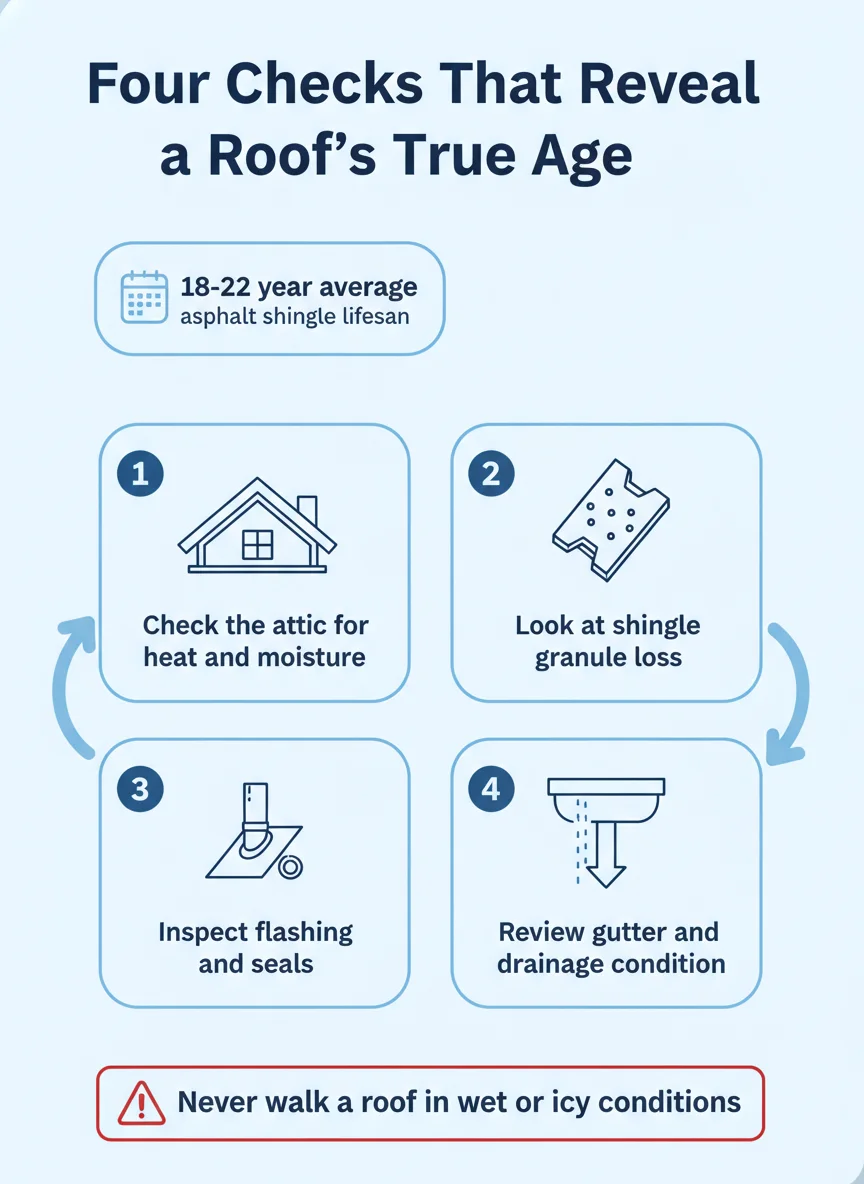
What Actually Determines How Long a Roof Lasts
A roof is a system of parts working together, not just a layer of shingles nailed to plywood. Installation quality and the attic environment underneath do more to determine lifespan than the shingle grade printed on the wrapper.
Installation Quality
Nail placement, proper overlap, and flashing detail around chimneys, valleys, and vent pipes matter more than most homeowners realize. A shingle that is under-nailed or installed off the manufacturer's pattern can lift in wind years before it should, and flashing that was caulked instead of properly integrated tends to fail quietly, letting water in long before anyone notices a drip inside.
This is also where the difference between a roof replacement done right the first time and a quick patch job shows up years down the road. A tear-off that exposes and corrects old decking issues sets a roof up to hit or beat its expected lifespan, while a rushed job over existing problems shortens it.
Ventilation and Attic Conditions
Heat and moisture trapped in an attic bake shingles from underneath, which is a different kind of wear than sun exposure from above. Poor intake or exhaust airflow lets summer heat build up and lets winter humidity condense on the underside of the decking, both of which age the roofing system faster than normal weathering alone.
A roof with balanced ventilation runs cooler in summer and drier in winter, and that single factor is one of the most common reasons two similar roofs age at different rates. It is worth checking before assuming a roof's problems are simply about time passing.
| Factor | Well-Maintained Roof | Neglected Roof |
|---|---|---|
| Attic ventilation | Balanced intake and exhaust, cooler attic | Trapped heat and moisture, faster decking wear |
| Gutter condition | Cleared regularly, water drains away from edges | Clogged, water backs up under shingle edges |
| Flashing and seals | Inspected and replaced as needed | Cracked caulk left unaddressed for years |
| Inspection frequency | Checked after major storms and seasonally | Only looked at once a visible leak appears |
The Roofing System, Not Just the Shingles
Underlayment, flashing, decking, and ventilation all work together with the shingles or metal panels to keep a home dry. Underlayment is the water-resistant layer directly beneath the shingles, and it is often the last line of defense if a shingle lifts or cracks. Flashing seals the places where the roof meets chimneys, walls, and skylights, which are the spots most likely to leak first.
Decking is the wood base everything is nailed to, and it can rot quietly under a leak for years before anyone sees a stain on the ceiling. Treating the roof as one connected system, rather than judging it by shingle color alone, gives a much clearer read on how many years are genuinely left.
Step-by-step: How to Judge Your Roof's Remaining Life
A homeowner can get a reasonable read on where a roof stands without climbing a ladder. Work through these checks from the ground and the attic before assuming age alone tells the story.
- Check the gutters: Granules collecting at the bottom of the downspout or in the gutter itself mean the shingle surface is wearing down faster than it should.
- Look from the street: Curling, cupping, or shingles that look darker or patchy in spots often signal uneven aging across the roof.
- Walk the attic: Look for daylight through the decking, damp insulation, or a musty smell, all signs moisture is getting in somewhere.
- Check the flashing: Look for cracked caulk or lifted metal around chimneys and vent pipes, common spots for early leaks.
- Review past repairs: A roof with several patch jobs in the same area may be nearing the point where repair stops being the better option.
- Note the ventilation: Confirm the attic has both intake and exhaust vents working, since blocked or missing ventilation accelerates wear.
- Get a second opinion: A trained eye on the roof surface and in the attic will catch early wear long before it shows up as an indoor leak.
What You'll Find When a Roof Is Reaching the End
Visual Signs
Shingles that curl at the edges or cup in the middle have lost the flexibility that keeps water moving off the roof instead of pooling. Bald spots where granules have worn away expose the asphalt layer beneath to direct sun, which speeds up cracking. Streaking or dark patches across large sections usually mean the surface is aging unevenly, often tied to ventilation problems in that part of the attic.
Missing or torn shingles after wind events are an obvious sign, but even without storm damage, shingles nearing the end of their life tend to look dull and flat compared to the sheen of a newer roof nearby. That visual contrast is often the first real clue something has changed.
Signs Inside the Attic or Ceiling
Brown or yellow stains on the ceiling drywall almost always trace back to a leak somewhere above, even if the roof looks fine from the street. In the attic, look for dark streaks on the underside of the decking, damp or compressed insulation, and any spot where daylight shows through a gap that should be solid wood.
A musty smell in the attic that was not there before is worth taking seriously, since trapped moisture is often present well before a visible leak ever reaches the ceiling below. Catching it at this stage usually means a smaller fix than waiting for a stain to appear.
DIY Checks vs Calling a Pro
Ground-level and attic checks are reasonable for a homeowner to do on their own. Looking at shingle condition with binoculars, checking gutters for granules, and scanning the attic for stains or daylight do not require climbing onto the roof itself and can be done safely a few times a year.
Anything that requires walking the roof surface, checking flashing up close, or diagnosing whether a leak is from the roof itself versus a plumbing vent or HVAC line is worth handing to a licensed roofer. Roof surfaces can be more fragile and more slippery than they look, and a trained eye will spot early wear that is easy to miss from the ground.
If a roof is already showing multiple signs at once, such as granule loss combined with attic staining, it is usually time for a full inspection rather than a guess. A professional can also tell you whether you are looking at a simple repair or a roof nearing replacement age, which saves money either direction.
Getting the Most Years Out of Your Roof
The roofs that reach or beat their expected lifespan almost always share the same traits: a solid install, good attic airflow, and an owner who did not wait for a drip to call someone out. None of that depends on luck, it depends on catching small issues early and keeping the whole system, not just the shingles, in working order.
Homeowners in Newnan and the surrounding area who want a straight read on where their roof actually stands can have Griffintegrity Roof & Remod take a look before guessing based on age alone.
Frequently asked questions
Does a roof's age always match how many years it will last?
No, age on the permit record and real remaining life often differ. Two roofs installed the same year can wear at very different rates depending on ventilation, installation quality, and how well the gutters and flashing were maintained.
What shortens a roof's lifespan the fastest in Georgia?
Poor attic ventilation is one of the biggest factors, since trapped heat and moisture bake the underside of the decking and shingles from below. Clogged gutters that let water back up under the edge also accelerate wear.
Can a roof last longer than its material's average rating?
Yes, a well-installed roof with good airflow and regular upkeep can outlast the industry average for its material. The reverse is also true, a roof with poor ventilation or a rushed install can fail well before that average.
How can I tell if my roof is near the end of its life without climbing up there?
Look for granules collecting in the gutters, shingles that look curled or cupped from the ground, and daylight or stains in the attic. Interior ceiling stains and a musty attic smell are also strong signs worth a closer look.
Does regular maintenance really add years to a roof?
Yes, keeping gutters clear, replacing cracked flashing early, and catching small leaks before they spread are the main things that stretch a roof's useful life. Neglect lets small problems turn into deck damage, which shortens the lifespan considerably.