
Why Overhang Matters on Homes Around Coweta County
Georgia gets its share of hard, fast rain, and a roof's overhang is the first line of defense that decides where that water goes once it leaves the shingles. On homes across Newnan and the surrounding towns, that overhang and the gutter hung beneath it work as one system. When they're sized and aligned correctly, water drops cleanly into the trough and away from the foundation. When they're off, even by a small margin, water ends up on the fascia, the siding, or pooling against the slab.
The overhang itself, meaning how far the roof structure extends past the exterior wall, is set when the home is framed and rarely changes after that. What homeowners can actually control and correct is how the drip edge, fascia, and gutter line up underneath it. That's the part worth understanding before you assume a gutter problem means you need a different overhang.
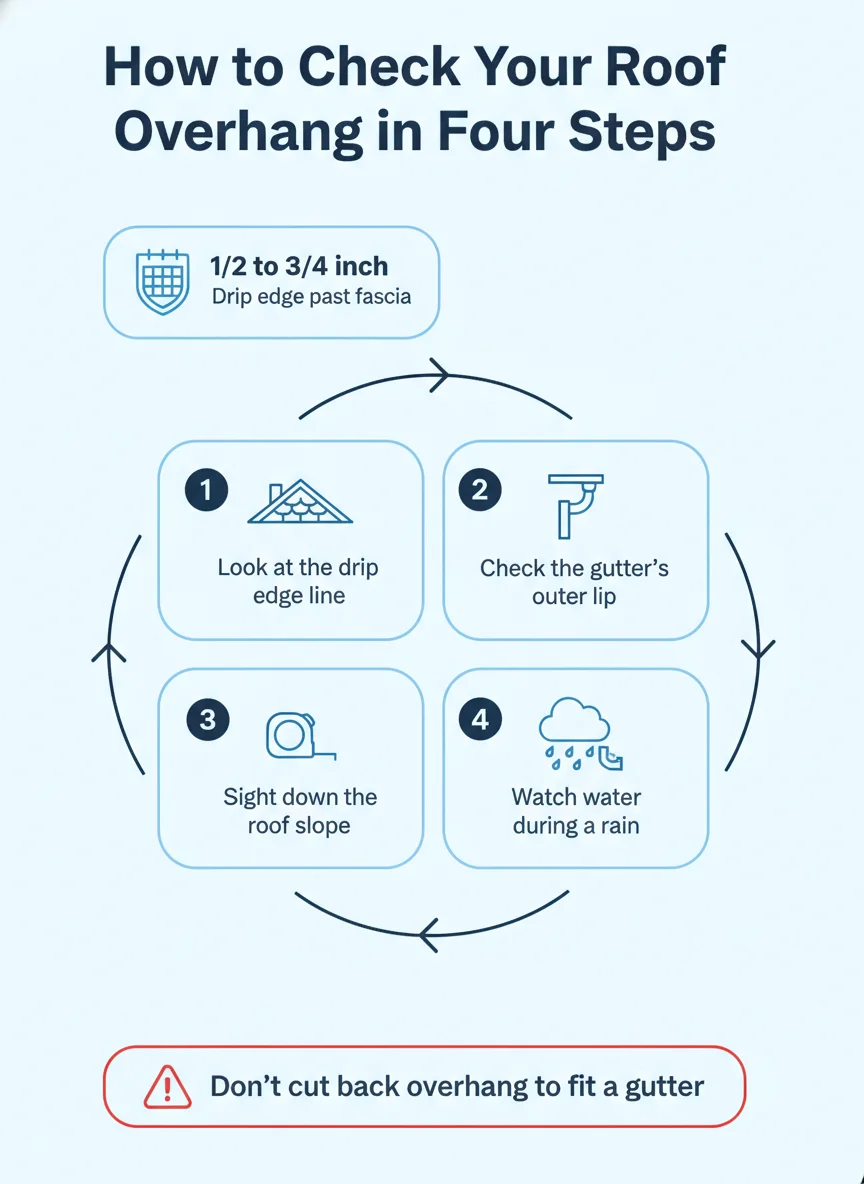
What Actually Determines Where Water Lands
Three things work together here: how far the rafters extend past the wall, how deep the fascia board is, and how the drip edge flashing is set relative to the gutter's back lip. Get any one of those wrong and water finds its way behind the system instead of into it.
Rafter Tail Length and Fascia Depth
The rafter tails, the ends of the roof framing that stick out past the wall, set the baseline overhang distance. A deeper fascia board gives more surface for the gutter hangers to grab onto and more room for the drip edge to lap properly. Shallow fascia, common on older or budget-built homes, leaves less margin for error during a gutter install.
This is also why a gutter that was hung on a home with a thin fascia board sometimes needs extra hanger support or a different mounting style than a gutter on a home with a deeper, newer fascia. It's not that the gutter itself is wrong, it's that the structure behind it gives less to work with.
Pitch and Roof Style
A steep pitch throws water off the roof surface fast, which means the drip edge needs to direct that water further into the gutter channel rather than right at the outer lip. A low-slope roof moves water more slowly and is more forgiving of a slightly shorter drip edge lap, but it's not exempt from the same basic rule.
Roof style changes this too. A home with a simple gable roof has long, consistent eave runs that are straightforward to fit. A home with multiple roof planes, dormers, or valleys has more transition points where water concentrates, and those spots need closer attention to drip edge placement than a plain straight run.
| Roof Style | Typical Eave Overhang | What It Means for Gutters |
|---|---|---|
| Simple gable or ranch | 12 to 16 inches | Straightforward, consistent fascia line, easiest to fit a gutter run against |
| Craftsman or bungalow style | 16 to 24 inches | Deeper overhang often paired with exposed rafter tails, needs gutter brackets sized to match |
| Multi-gable or Georgia farmhouse style | 12 to 18 inches, varies by section | Valleys and transitions concentrate water, so drip edge alignment matters more at those points |
The Fascia, Drip Edge, and Gutter System Explained
The fascia board is the vertical trim piece that caps the rafter ends and gives the gutter something solid to hang from. The drip edge is a thin strip of metal flashing installed under the shingles at the roof's edge, designed to carry water off the roof deck and direct it past the fascia rather than letting it wick back underneath.
When these three pieces (fascia, drip edge, and gutter) are installed together correctly, the drip edge laps slightly over the gutter's back lip so water has nowhere to go but down into the trough. This is the detail that actually governs gutter performance day to day, far more than the raw inches of roof overhang.
Step-by-step: How We Check and Set a Gutter Line
When our crew sets a new gutter run or repairs an existing one, we're working through the same basic sequence every time, whether it's a straightforward ranch roof or a home with multiple roof planes.
- Check drip edge condition: We look at the existing drip edge flashing to confirm it's intact and angled properly over where the gutter will sit.
- Measure the fascia line: We run a string line down the full length of the fascia to catch any dips or high spots before mounting anything.
- Set the pitch: Gutters need a slight slope toward the downspouts, not a flat run, so we establish that fall before the first hanger goes up.
- Mount hangers to solid fascia: Hangers get screwed into solid wood behind the fascia, spaced to support the gutter's full weight once it's full of water.
- Confirm drip edge overlap: We double check the drip edge still laps into the gutter channel once the gutter is hung, adjusting if the reveal looks off.
- Test with water: Running water down the roof surface shows immediately whether it's landing in the trough or splashing past it.
What Too Little or Too Much Overhang Looks Like
Signs the Setup Is Falling Short
The most common sign is water staining or dark streaks on the fascia board directly below the roofline, which usually means water is sneaking behind the gutter instead of into it. Soft or spongy fascia when you press on it is a further sign that moisture has been getting in for a while.
Pooling at the foundation after a rain, even with gutters installed, often traces back to this same issue rather than a problem with the downspouts themselves. If the gutter looks fine but the ground below the eave stays wet, the overlap at the roofline is worth a closer look.
Signs the Overhang Is Working as Intended
A properly working system is almost invisible, which is part of why it gets overlooked. Water runs cleanly off the shingles, disappears into the gutter trough, and exits through the downspouts without any visible splashing or staining on the fascia.
Dry ground directly below the eave line during and after a hard rain is one of the clearest signs the whole system, overhang, drip edge, and gutter together, is doing its job the way it was designed to.
What a Homeowner Can Check vs. What Needs a Pro
A homeowner can do a visual check from the ground or a ladder: look at the fascia for staining or soft spots, watch where water lands during a rain, and check that gutters are free of debris so they're not overflowing for reasons that have nothing to do with overhang or pitch.
Anything involving the drip edge flashing, fascia repair, or re-hanging a gutter run to correct pitch is work that calls for a licensed professional. Getting under the shingle edge to reset flashing without damaging the roof covering takes the right tools and some practice, and a gutter hung at the wrong pitch will just move the same water problem somewhere else on the house.
If you're planning a full gutter replacement or new metal fabrication work rather than a spot repair, that's also the moment to have the fascia and drip edge checked together, since replacing one without confirming the other is set up correctly just repeats the same problem down the road.
Getting the Whole System Working Together
Roof overhang, fascia depth, drip edge placement, and gutter pitch aren't separate decisions, they're one system that either moves water away from a home or lets it find a way in. Most of the drainage problems homeowners notice trace back to one of these pieces being slightly out of alignment with the others rather than the overhang length itself being wrong.
If you've noticed staining under the eaves or water pooling where it shouldn't be, it's worth having someone look at the whole system rather than just the gutter. Griffintegrity Roof & Remod has been checking these details on homes across Newnan and the surrounding towns for 10 years, and the same crew that handles a roof repair can look at the fascia and drip edge while they're up there.
Frequently asked questions
How far should a roof overhang past the wall for gutters to work right?
Most homes in Georgia have an eave overhang somewhere in the 12 to 18 inch range, measured from the exterior wall to the fascia. What matters more for gutter performance than the overhang itself is where the drip edge sits relative to the gutter's back lip, since that's what actually directs water into the trough instead of behind it.
What happens if a roof doesn't overhang far enough for the gutter?
A short or poorly flashed overhang lets wind-driven rain slip behind the gutter and run down the fascia and siding instead of into the trough. Over time that shows up as peeling paint, soft fascia board, or dark streaking right below the roofline.
Can you add more overhang to an existing roof to fix a gutter problem?
You generally can't extend the rafter tails on a finished roof without a larger remodeling project, but you can correct most gutter problems without touching the overhang itself. Re-setting the drip edge, adjusting the gutter's hanger height, or re-pitching the run usually solves the issue.
Does roof pitch affect how much overhang a gutter needs?
Yes, steeper pitches throw water off the roof with more speed and force, so they benefit from a drip edge set slightly further into the gutter channel to keep water from jumping the lip during hard rain. Lower-pitch roofs are more forgiving but still need the drip edge properly lapped over the gutter's back edge.
Why is water splashing behind my gutters even though they look installed correctly?
This is almost always a drip edge or fascia alignment issue rather than an overhang length problem. The metal edge flashing needs to extend past the fascia and down into the gutter channel; if it was installed flush with the fascia instead of angled over the gutter, water will run behind it no matter how far the roof overhangs.