
Why Roof Warranties Confuse Homeowners in Coweta County
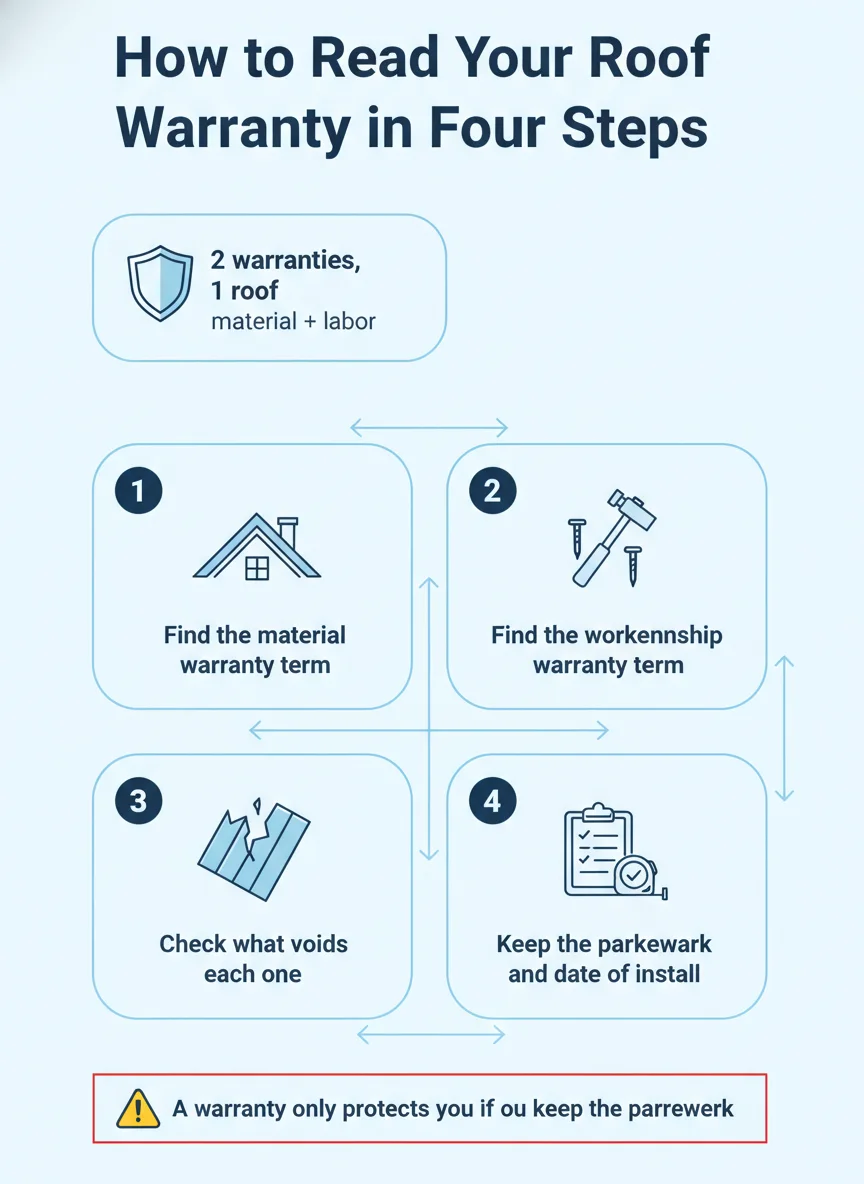
Most homeowners assume a roof warranty is one simple thing: a piece of paper that says the roof is covered for a set number of years. In reality it's almost always two separate warranties stapled together, one from the company that made the shingles or metal panels, and one from the contractor who installed them. Each has its own length, its own rules, and its own way of being voided.
That distinction matters more in a region like Coweta County, where homes sit through hot, humid summers and the occasional ice storm every winter. A roof that looks fine on the surface can still have a workmanship issue hiding at a flashing seam or a vent boot, and knowing which warranty actually covers that failure determines whether a fix is free or comes out of your pocket.
What Actually Determines How Long a Roof Warranty Lasts
The length of coverage isn't arbitrary. It's set by two different parties for two different reasons, and understanding both halves is the only way to know what you're actually protected against.
The Material Warranty
This one comes from the manufacturer of the shingles, metal panels, or underlayment. It covers manufacturing defects, like a shingle that curls, cracks, or loses its granules well before it should. These warranties are often written to run for decades, and some manufacturers offer coverage for the life of the roof on certain product lines, especially when installed by a contractor certified by that manufacturer.
What the material warranty will not do is cover a leak caused by a nail that missed its mark or a step flashing installed at the wrong angle. Manufacturers test their products, not your contractor's crew, so they draw a hard line between a product failure and an installation mistake.
The Workmanship Warranty
This one comes from the roofing company that did the install, and it's the one that actually protects you against the most common cause of early leaks, which is a mistake in the install itself. Workmanship warranty terms are set by the individual contractor, so they vary widely from company to company, and a shorter or unclear term is one of the easiest ways to spot a contractor who isn't standing behind their own work.
A longer, clearly stated workmanship warranty is one of the better signs that a company plans on being around to honor it. Griffintegrity Roof & Remod backs installs with a stated 10 year no-leak workmanship warranty, in addition to whatever material coverage comes from the manufacturer.
| Material Warranty | Workmanship Warranty | |
|---|---|---|
| Who provides it | The shingle or panel manufacturer | The installing roofing contractor |
| What it covers | Defects in the product itself | Mistakes made during installation |
| Typical length | Often decades, sometimes lifetime on materials | Set by the contractor, varies company to company |
| What can void it | Improper ventilation, unapproved repairs, non-certified install | Repairs by another company, lack of maintenance |
What Each Warranty Is Actually Protecting
Think of the roof as a system with two failure points. The shingle or panel itself can fail on its own, which is a product problem. Or the way the pieces were put together, flashing around a chimney, nail placement, underlayment laps, ventilation balance, can fail, which is an installation problem. A warranty that only covers one of those leaves half the roof exposed.
This is also why manufacturer certification programs exist. When a roofing company is vetted and certified by a manufacturer, like an Owens Corning Preferred Contractor designation, the manufacturer is willing to extend enhanced material warranty coverage because they trust the install quality behind it. That certification doesn't replace a workmanship warranty, but it does mean the two are more likely to line up instead of leaving gaps.
Step-by-Step: How to Check Your Own Roof Warranty
If you're not sure what you're covered for, a few minutes with your paperwork or a phone call will clear it up. Here's the order to work through it.
- Find the install date: Warranty clocks typically start the day the roof was completed, not the day you signed the contract, so locate your final invoice or completion certificate.
- Locate the material warranty: This usually comes as a separate document from the manufacturer, sometimes mailed after registration, sometimes included in your contractor's closing paperwork.
- Locate the workmanship warranty: This should be spelled out in your contract or a separate warranty certificate from the contractor who installed the roof.
- Check the voiding conditions: Read what maintenance or repair restrictions apply, since unapproved repairs by another company are a common way coverage gets cut short.
- Confirm registration status: Some manufacturer warranties need to be registered within a specific window to activate full coverage, so confirm this was done at the time of install.
- Store copies in two places: Keep a physical copy and a digital photo or scan, since warranty claims move faster when you can produce the paperwork on request.
What You'll Find When You Actually Dig Into the Paperwork
If the Roof Was Installed Recently
Recent installs, especially from a certified contractor, often come with both warranties stacking cleanly. You should have a manufacturer document listing the material terms and a separate contractor-issued certificate or contract clause spelling out the workmanship term. If you only have one of the two, it's worth a call to the installer to get the missing piece on file.
This is also the easiest time to catch a registration gap. If a manufacturer warranty required registration and it was never submitted, enhanced coverage tiers may not have activated even though the standard material defect coverage still applies.
If the Roof Is Older or You Don't Know the History
Older roofs, or ones bought with the house, are a different situation. The original workmanship warranty may have already expired, or it may have been tied to the original contractor and not transferred when the home changed hands. The material warranty is more likely to still be active given how long those terms typically run, but you'll need the product name and install date to confirm it with the manufacturer.
If you genuinely can't find any paperwork, a roof inspection can at least establish current condition, even if it can't recover a lost warranty. From there you're working with the roof's actual state rather than guessing.
What a Homeowner Can Handle vs. What Needs a Licensed Roofer
Reading your warranty paperwork, confirming registration, and keeping records organized is entirely a homeowner task. No ladder, no risk, just a filing job that pays off the day you actually need to use the coverage.
Anything involving the roof surface itself, from a suspected leak to a missing shingle to flashing that looks lifted, should go to a licensed roofer rather than a general handyman. Warranty terms, both material and workmanship, almost always specify that repairs must be done by a qualified professional, and sometimes specifically by the original installer, to keep coverage intact.
If you're weighing whether a specific issue is worth a warranty call versus an out-of-pocket fix, it helps to understand what actually determines a roof's overall lifespan first, since that context tells you whether you're dealing with a warranty-covered defect or just normal wear. Our post on how long a roof actually lasts and what determines it walks through that in more detail.
Keeping Your Warranty Worth Something Over Time
A warranty is only as useful as the paperwork behind it and the contractor who stands behind it years later. Homes across Newnan and the surrounding towns see enough seasonal swings, humid summers into colder winters, that a roof's weak points tend to show up eventually, and that's exactly when warranty terms get tested.
The best time to understand your coverage is before you need it, not during a leak. Griffintegrity Roof & Remod has been installing and standing behind roofs in the area for 10 years, and can walk you through exactly what's covered on your current roof or a new one.
Frequently asked questions
How long does a roof warranty usually last?
It depends on which part of the warranty you mean. Material warranties from manufacturers often run for decades, sometimes for the life of the roof, while the workmanship warranty from the installing contractor is usually a separate, shorter term that the contractor sets themselves.
What's the difference between a manufacturer warranty and a workmanship warranty?
The manufacturer warranty covers defects in the shingles, underlayment, or other materials themselves, while the workmanship warranty covers mistakes made during installation, like a flashing detail done wrong. You can have great materials ruined by poor installation, which is why both warranties matter.
Does a roof warranty transfer if I sell my house?
Many manufacturer warranties can transfer to a new homeowner, often with a notification window and sometimes a reduction in remaining coverage. Workmanship warranty transferability depends entirely on the contractor who issued it, so check the paperwork or ask directly.
What voids a roof warranty?
Unapproved repairs, improper ventilation, and skipping required maintenance are common ways homeowners accidentally void coverage. Using an installer who isn't certified by the manufacturer can also limit or void the enhanced warranty tiers that come with certified installation.
Do I need to register my roof warranty?
Some manufacturer warranties require registration within a set window after installation to activate full coverage, while others activate automatically when a certified contractor installs the product. Ask your installer whether registration is required and keep a copy of any confirmation.