
Why the Morning After a Storm Matters
Coweta County and the towns around it, from Sharpsburg to Peachtree City to Senoia, see their share of strong spring and summer storm systems that roll through the south Atlanta metro with wind gusts and sometimes hail. Most of the time a house rides it out fine. But the morning after is the window when damage is easiest to spot and document, before more rain, more wind, or just daily wear erases the clues.
You don't need a ladder or any special tools to do a useful first pass. A slow walk around your own property, a look at your gutters, and a quick check of your attic will tell you most of what you need to know about whether last night's weather left a mark worth worrying about or a problem that's fine to leave alone.
What a Storm Actually Does to Your Roof and Gutters
Wind and hail stress a roof and its attached systems in different ways, and knowing the difference helps you know what you're looking for when you walk the yard the next morning.
Wind and Uplift
Strong, sustained wind works at the edges of shingles and panels first, where the seal is weakest, lifting tabs and sometimes tearing them loose entirely. It also puts pressure on anything not fastened down tight, like gutter sections, loose fascia boards, or older flashing around chimneys and vents.
The result is often scattered, not uniform. One section of roof facing the prevailing wind can look rough while the rest looks untouched. That's normal, and it's exactly why a full walk around the house, not just a glance from the front yard, matters.
Hail and Impact
Hail works differently. Instead of lifting material, it bruises or cracks it on impact, which can knock granules loose from asphalt shingles or dent soft metals like gutters, vents, and AC housing. This kind of damage is often harder to spot from the ground than wind damage.
That's part of why dented gutters, downspouts, or mailbox tops are a useful stand-in clue. If hail was hard enough to dent metal around your yard, it was hard enough to affect your roof surface too, even if you can't see it clearly without a closer inspection.
| Sign | What It Looks Like | What It Usually Means |
|---|---|---|
| Granules in gutters or yard | Small black or gray grit, like coarse sand | Normal shedding over time, or fresh impact if it's a sudden, heavy amount |
| Dented soft metal | Dimples in gutters, vents, or AC housing | Hail was large or hard enough to affect the roof surface too |
| Sagging gutter section | Gutter pulling away from the fascia or pooling water | Fasteners loosened by wind, needs attention before the next storm |
| Daylight or damp spot in attic | Light coming through the roof deck, or a wet stain | Active penetration, needs a prompt look |
The Parts of Your Roof and Gutter System Most at Risk
Not every part of a roofing system takes a storm the same way. Shingles and underlayment handle most of the direct wind and hail exposure, while flashing around chimneys, skylights, and vent pipes is often the first place a small gap turns into a leak. Gutters and downspouts take the brunt of wind load because they're mounted at the edge of the structure and catch runoff from the whole roof at once.
Siding and fascia boards are easy to overlook but worth a glance too, since wind-driven rain can find gaps there just as easily as on the roof deck itself. If your home has any metal fabrication work like fascia panels or finials, a dent or a loosened seam there is a reasonable sign that your roof caught the same wind.
Step-by-Step: Your Next-Morning Walkaround
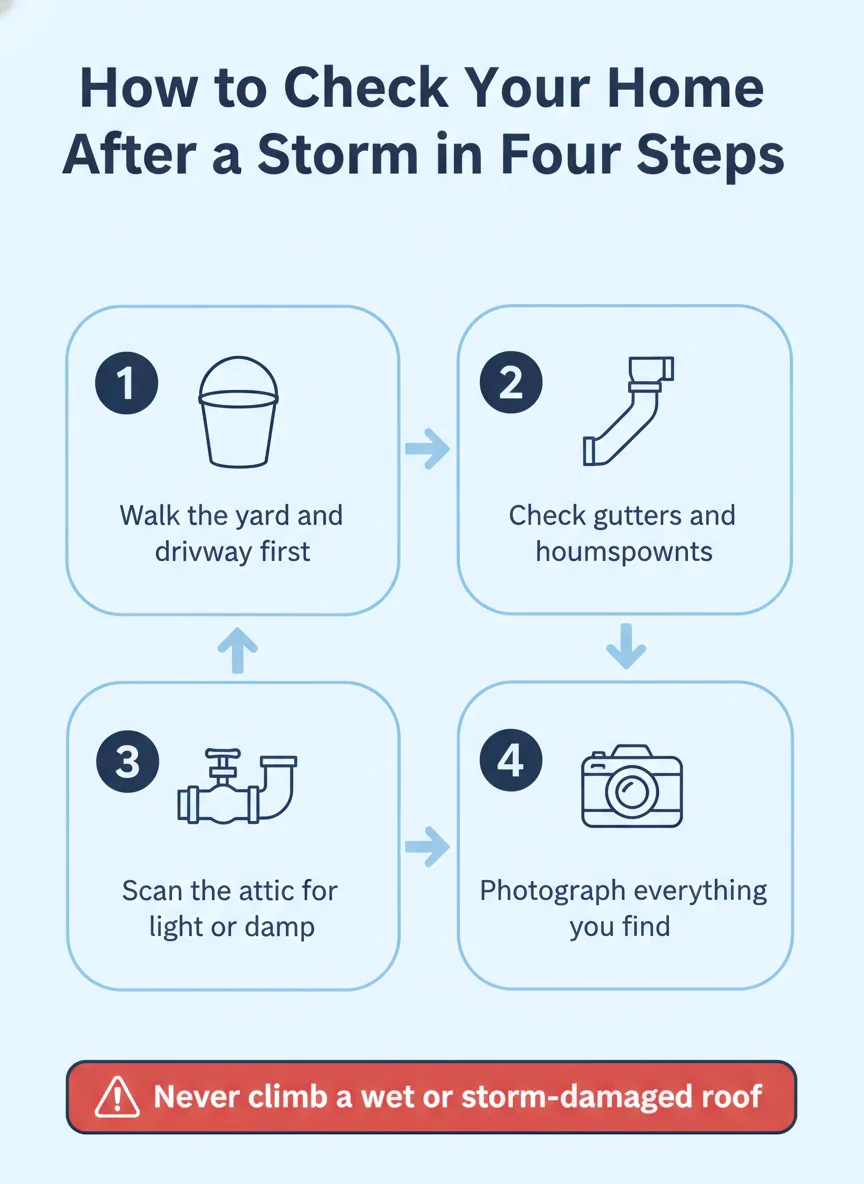
Do this in order, starting on the ground, before you decide whether anything needs a closer look up top.
- Walk the yard: Look for shingle pieces, granules, broken branches, or any roofing material on the ground, driveway, or in flower beds around the house.
- Check the gutters: Look for dents, sagging sections, or spots where a gutter has pulled away from the fascia board, and check that downspouts are still attached and clear.
- Scan the roofline from the ground: Walk the full perimeter of the house and look up at the roof edge and slopes for missing or curled shingles, using binoculars if you have them.
- Check soft metals: Look at vents, flashing, and any exposed metal fascia or trim for dents, which can be a sign of hail size and force even when shingles look okay.
- Go into the attic: With a flashlight, look for daylight coming through the roof deck, wet insulation, or dark water stains on the underside of the sheathing.
- Check siding and screens: Walk the exterior walls for loose or cracked siding panels and check porch or patio screens for tears from wind-blown debris.
- Photograph what you find: Take clear, dated photos of anything unusual from the ground, your yard, your gutters, and your attic, before cleanup disturbs the scene.
What You Might Find, and What It Means
Once you've walked the property, you'll usually land in one of two categories: things that can wait, and things that shouldn't.
Signs You Can Wait On
A handful of granules in the gutter, a little loose debris in the yard, or a small scuff on a gutter section usually aren't urgent. These are common after any decent wind event and don't necessarily mean your roof took real damage. Keep the photos anyway, in case a pattern shows up later.
Minor cosmetic marks on siding or a single loose screen are also generally fine to schedule for a routine look rather than an emergency call. The goal of the next-morning check isn't to panic over every mark, it's to catch the handful of things that do need prompt attention.
Signs That Need a Same-Week Call
Multiple missing or torn shingles, a sagging or detached gutter section, visible dents across several soft metal surfaces, or any sign of daylight or dampness in the attic all point to damage that's worth a professional look sooner rather than later. These are the signs most likely to let water in if left alone through the next rain.
If you're on the fence, a storm and hail damage inspection can settle it either way, and a documented look now makes any later insurance conversation easier regardless of what it turns up.
DIY vs. Calling a Pro
The ground-level walkaround, the gutter check, and the attic look are all things most homeowners can safely do themselves the morning after a storm. They require no special equipment beyond a flashlight and maybe a pair of binoculars, and they give you a real head start on knowing whether anything is wrong.
Getting on the roof itself, pulling back shingles to check underlayment, or evaluating whether a dent or a tear is cosmetic or structural is where it's worth bringing in someone who does this for a living. A trained eye can tell the difference between damage that's purely surface-level and damage that's going to let water in during the next rain, which isn't always obvious even up close.
If your walkaround turns up anything from the second category above, or even if you're just not sure, it's reasonable to get a second opinion before the next storm system comes through. Georgia's weather doesn't usually give you much of a gap between events.
Keep the Checklist Handy
Print this list or save it somewhere you'll actually find it the next time a storm rolls through, because the value of a next-morning check comes from doing it consistently, not just after the one storm that made the news. A few minutes of looking around can be the difference between catching a small issue early and discovering it months later as water damage inside the house.
If your walkaround turns up something worth a second look, or you'd just rather have a professional set of eyes on it, Griffintegrity Roof & Remod Inc is available to take a look.
Frequently asked questions
How soon after a storm should I check my roof?
The morning after is ideal, once wind has died down and the roof surface has had a chance to dry. Doing it the same day you noticed the storm, in daylight, gives you the clearest look before debris gets disturbed or more weather moves in.
What are the first signs of storm damage on a house?
Granules in the yard or gutters, bent or missing shingle tabs, dented soft metals like vents and flashing, and sagging or detached gutter sections are usually the first visible clues. Dark spots or daylight in the attic are a less obvious but more serious sign.
Is it safe to inspect my own roof after a storm?
Walking the ground and checking your attic is safe for most homeowners, but getting on the roof itself right after a storm is not recommended. Surfaces can be wet, slippery, or structurally compromised in ways that aren't obvious from a quick look.
Do I need to call my insurance company right away?
Not necessarily the same morning, but it's smart to document damage with photos as soon as you spot it so you have a clear record if you do file later. A roofing contractor can help you figure out whether what you're seeing is likely to be covered before you make that call.
What if I don't see any damage at all?
No visible damage from the ground doesn't always mean everything is fine, especially with hail, which can bruise shingles without knocking anything loose. If the storm was significant, it's still worth a closer look or a professional opinion within the following week.