
Why storm prep matters for homes in Coweta County
Severe weather watches in the Newnan area can turn from a distant forecast to wind and rain moving through within a few hours, and a roof that was fine on Monday can take real damage by Monday night if nobody got ahead of it. The good news is that most of the prep work that actually matters doesn't take long and doesn't require a ladder.
The goal isn't to storm-proof your entire house in an afternoon. It's to knock out the handful of steps that reduce the odds of damage and, if damage does happen anyway, give you a clear before-and-after picture to work from. That second part matters more than most homeowners realize until they need it.
What actually causes storm damage to a roof?
Most storm damage to a residential roof comes from wind, not from the rain itself. Wind lifts shingle edges that are already loose, drives debris into the roof surface, and snaps or drops tree limbs onto the structure. Heavy rain becomes a problem mainly when it finds an entry point that wind, age, or a clogged gutter system already created.
Wind and loose debris
Anything in the yard that isn't anchored down, patio furniture, trash cans, toys, loose fencing sections, becomes a hazard to the roof and siding once wind picks up. A lawn chair airborne in a 50 mph gust can crack a shingle, dent a gutter, or worse. Walking the yard before a storm and bringing in or tying down loose items is one of the highest-value five minutes you'll spend.
Overhanging tree limbs are the other major wind risk. A dead or weak branch that's been hanging on for a year of calm weather often doesn't survive the first real gust. If you have limbs extending over the roofline and can trim them safely from the ground or with a pole saw, do it ahead of the forecast rather than after.
Water intrusion through clogged systems
A roof sheds water efficiently when its gutters and downspouts are clear and its flashing is intact. When gutters are full of leaves and debris, rainwater backs up under the shingle edge or fascia instead of running off, which is how a storm turns a dry attic into a wet one. Clearing gutters before a forecast storm is one of the simplest ways to prevent water damage that has nothing to do with the shingles themselves.
If you've had any roof work done, whether roof repair or a full roof replacement, it's still worth confirming the gutters are clear and the downspouts are pointed away from the foundation before a forecast storm. A well-installed roof can still take on water if the drainage around it isn't doing its job.
| Prep Item | Before the Storm | After the Storm |
|---|---|---|
| Photos | Ground-level shots of roof, gutters, and siding | Compare against the before set for changes |
| Gutters | Clear of leaves, firmly attached, draining freely | Check for sagging, detached sections, or granule buildup |
| Yard items | Secured, tied down, or brought inside | Walk the yard for debris on or near the roof |
| Tree limbs | Trimmed back from the roofline where reachable | Look for new breaks or limbs resting on the roof |
Know your home's shutoffs before you need them
Part of storm prep isn't about the roof surface at all, it's about knowing your home well enough to react fast if something does go wrong. Know where your attic access hatch is and how to get to it quickly, since that's often the first place a leak shows up as a wet spot or a drip. Know where your main water shutoff is too, since a storm that knocks a tree limb through a window or wall can bring plumbing damage along with it.
This takes two minutes to confirm and can save real time during an actual emergency, when you're not thinking clearly and every minute of standing water matters. Walk through it once with everyone in the household so it's not just you who knows.
Step-by-step: your 5-minute storm prep checklist
Run through this list whenever a severe weather watch or warning is issued for the Newnan area. None of it requires a roof climb, and all of it takes less time than most people spend waiting on coffee to brew.
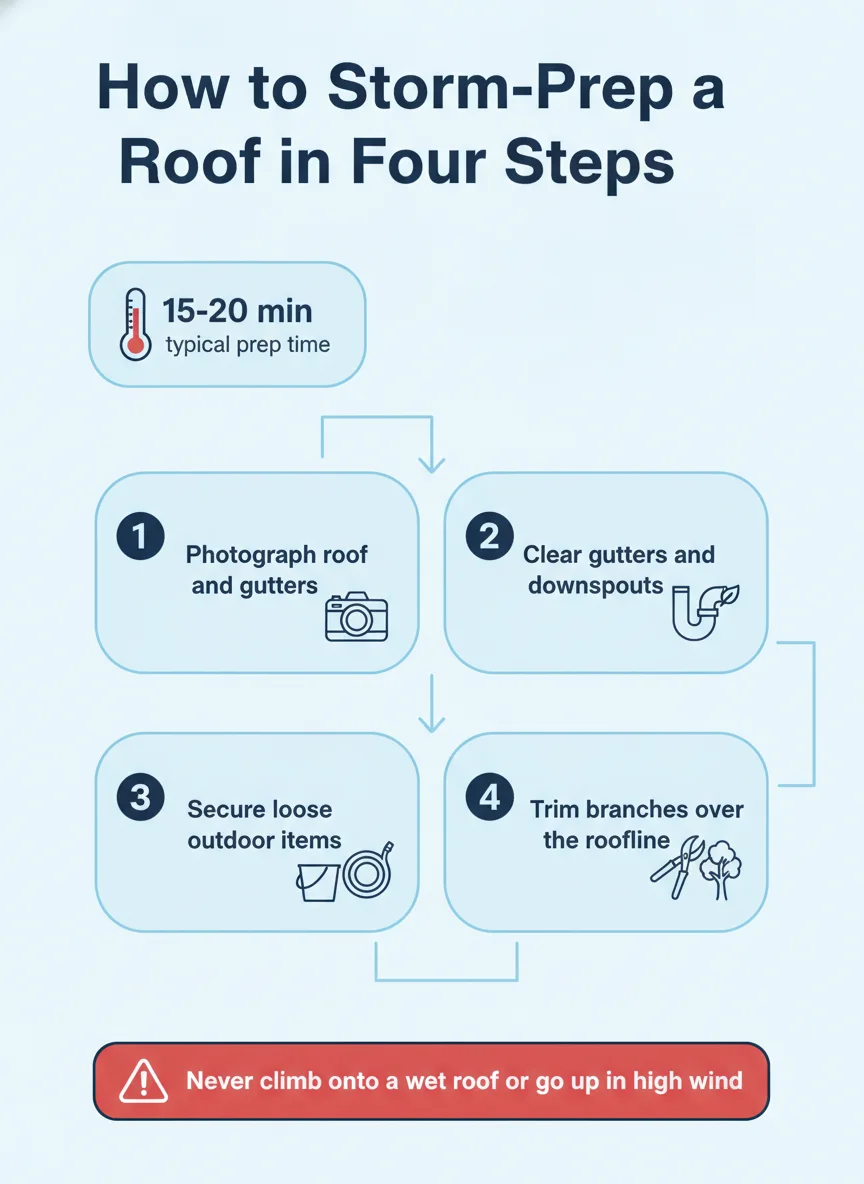
- Photograph the exterior: Walk the perimeter of your home and take clear ground-level photos of the roof, gutters, and siding. This gives you a documented before state if anything changes.
- Clear the gutters: Pull leaves and debris from gutters and downspouts so rainwater has a clear path off the roof instead of backing up under the edge.
- Secure loose items: Bring in or tie down patio furniture, trash cans, and anything else in the yard that wind could turn into flying debris.
- Trim reachable branches: Cut back any dead or overhanging limbs you can safely reach from the ground before wind does it for you.
- Confirm your shutoffs: Locate your attic access and main water shutoff so you can act fast if a leak or a broken window lets water in.
- Check the forecast timing: Note when the worst weather is expected so you're not caught outside finishing prep as the storm arrives.
What should you look for once the storm passes?
Once the weather clears, do a ground-level walk of your home's exterior before you do anything else. Look up at the roofline for shingles that look displaced, curled, or missing entirely, and check metal panels or flashing for obvious dents or lifted edges. Compare what you see against the photos you took beforehand.
Signs visible from the ground
Granules collecting in the gutters or at downspout outlets, gutters pulled away from the fascia, and tree limbs resting on the roof are all signs worth a closer look. A sagging gutter section or a visible gap at the roof edge usually means something shifted during the wind.
Inside the house, check ceilings and upper closet corners for new water staining, especially in rooms directly under roof valleys or near chimneys. A small stain today is a lot cheaper to deal with than the same leak six months from now.
When ground-level isn't enough
If anything looks off from the ground, or if you had a known weak spot before the storm, that's the point to call a roofer rather than climb up yourself. A trained eye can often spot hail damage or wind-lifted shingles that aren't obvious from the yard, and they know what to document if an insurance claim ends up being part of the picture.
This is also the point where your before photos earn their keep. Side-by-side comparisons make it much easier to show what changed, whether you're explaining it to an adjuster or just deciding whether a repair can wait.
What should you handle yourself versus calling a pro?
Everything on the prep checklist, photographing, clearing gutters you can safely reach, securing yard items, and trimming low branches, is reasonable for most homeowners to handle on their own. These are ground-level, low-risk tasks that don't require special equipment beyond a ladder and some common sense about weather conditions.
Where it makes sense to bring in a professional is anything involving climbing onto the roof itself, trimming limbs you can't reach from the ground, or evaluating damage after a storm that you can't fully confirm by looking up from the yard. Roofing surfaces can be deceptively slick even when they look dry, and a fall risk isn't worth saving a phone call.
If a storm does leave visible damage, whether that's a handful of missing shingles or something that looks more serious, getting a storm and hail damage inspection scheduled promptly matters. Smaller issues left unaddressed tend to turn into bigger ones the next time weather rolls through.
Make storm prep part of your routine, not a one-time scramble
The households that handle severe weather best aren't the ones with the fanciest gear, they're the ones who've run through this checklist enough times that it's second nature. Keep a flashlight, your phone charged, and five minutes set aside whenever a watch goes up for Coweta County, Fayette County, or anywhere else in the region homeowners here keep an eye on.
If your roof has been due for attention before a storm season even starts, whether that's clearing gutters, trimming back trees in Peachtree City or elsewhere in the region, or getting ahead of a repair you've been putting off, Griffintegrity Roof & Remod is a straightforward call to make before the next forecast rolls in.
Frequently asked questions
What should I do to my roof before a storm hits in Georgia?
Photograph your roof and gutters from the ground, clear debris from the gutters and downspouts, and secure or bring in anything loose in the yard that wind could turn into a projectile. Trim back any branches hanging over the roofline if you can safely reach them, and make sure you know where your attic access and main water shutoff are before the weather arrives.
How do I know if my gutters are storm-ready?
Storm-ready gutters are clear of leaves and debris, firmly attached with no sagging sections, and draining away from the foundation through working downspouts. If water overflows the edge during a normal rain, clear them now rather than during the storm, since clogged gutters push water back under the edge of the roof.
Should I trim trees before a storm or after?
Before, whenever you have advance notice. Dead limbs and branches that overhang the roofline are the most common source of storm damage to a roof, and removing what you can safely reach beforehand is far easier than dealing with it after a limb has already come down.
What should I check on my roof after a storm passes?
Walk the perimeter of your home and look up from the ground for missing or displaced shingles, dented metal, sagging gutters, and granules collecting in downspouts or at the base of the house. Compare what you see to the photos you took beforehand, and if anything looks different, that is worth a closer look.
Do I need a professional for roof storm prep or can I do it myself?
Ground-level prep like photographing, clearing debris you can reach safely, and securing loose items is something most homeowners can handle themselves. Climbing onto the roof itself, trimming high branches, or inspecting after a storm for damage you can't confirm from the ground is where it makes sense to bring in a roofing contractor.