
What a windstorm does to a roof in Georgia
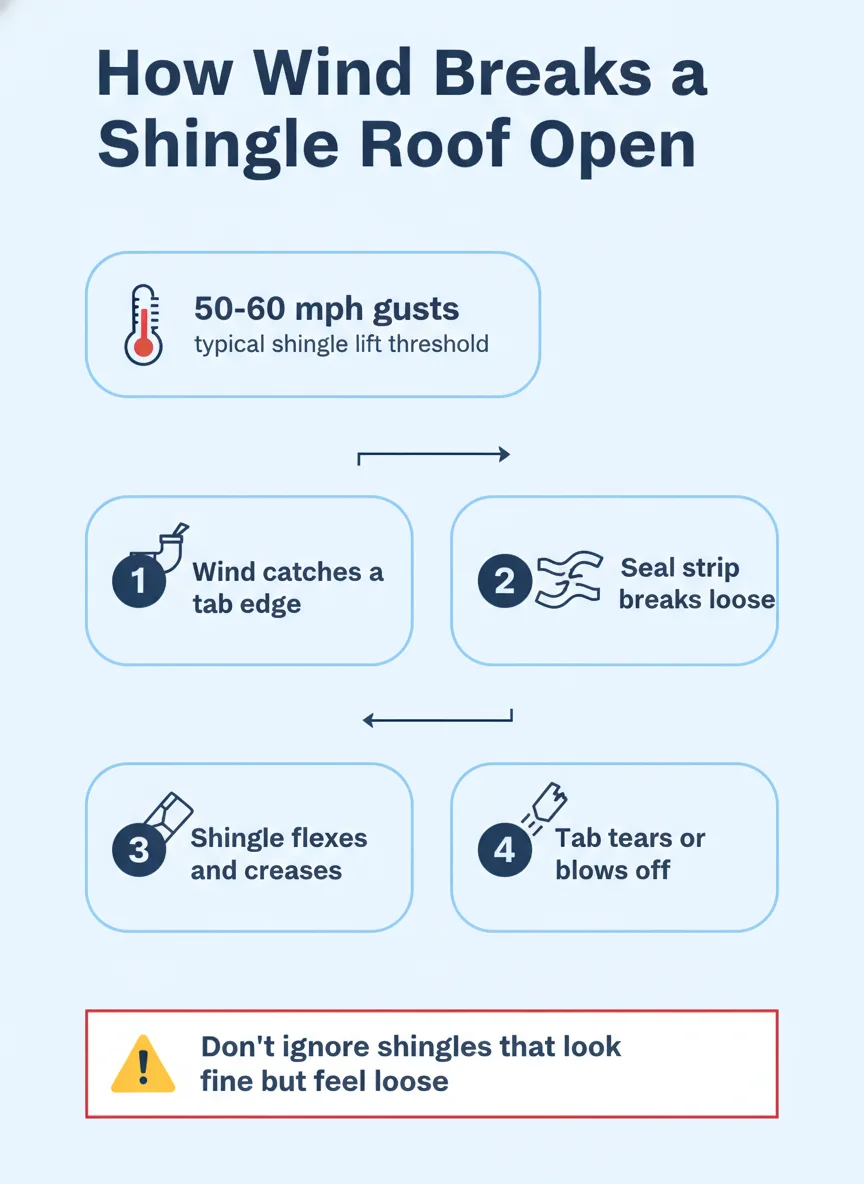
Georgia sees its share of straight-line wind events and spring storm systems that roll through Coweta County and the rest of the south metro Atlanta area, and a roof doesn't need a named hurricane to take damage. Gusts in the 50 to 60 mph range, the kind that come through with a strong thunderstorm, are enough to get under the edge of an asphalt shingle and start working it loose. Homeowners usually notice the obvious part first: a bare patch on the roof, shingle pieces in the yard, or granules collecting in the driveway after a storm.
What's harder to see from the ground is everything that happened around that bare patch. Wind doesn't damage a roof in one neat spot, it stresses a whole section of shingles at once, and the ones still nailed down may be just as compromised as the ones that blew away. That's why a quick look from the driveway after a storm tells you a lot less than it feels like it does, and why getting eyes on the actual roof surface matters before you decide what kind of fix you need.
Why a few missing shingles usually mean more hidden damage
Asphalt shingles rely on a factory-applied seal strip, a thin band of adhesive that bonds each shingle to the one below it once the sun warms it after installation. That bond is what keeps shingles flat against the roof deck in wind. When a gust gets under the tab edge, it doesn't just lift the one shingle, it can pop the seal on neighboring shingles that never fully tear loose. Those shingles look fine sitting there, but the bond holding them down is gone.
Broken seals you can't see from the ground
A shingle with a broken seal strip will often sit flush and look completely normal from the street or even from a ladder at the eave. The only way to find it is to walk the roof and check each shingle by hand, which is part of why a visual-only drive-by estimate misses so much. Left alone, these unsealed shingles are first in line to go in the next windstorm, even a weaker one.
This is also the main reason a roofer will often recommend a slightly wider repair area than just the bare patch you can see. Replacing only the shingles that are physically gone and leaving the surrounding unsealed ones in place is a short-term fix, since those neighbors are already compromised and likely to fail again soon.
Creased and lifted tabs
Wind can also crease a shingle without tearing it off at all. When a tab flexes up and back down under gust pressure, it can crack the asphalt mat along the fold line even though the shingle stays nailed in place. A creased shingle has lost most of its water-shedding ability at that crease, and it will usually show up as a faint line or a slightly curled tab when a roofer looks closely.
These creased shingles are a judgment call. On a newer roof they may be isolated enough to swap out individually. On an older roof where the asphalt has already lost flexibility from years of Georgia sun, creasing tends to show up across a much wider area, which is one of the signals that tips the decision toward replacement instead of patching.
| Situation | Repair usually makes sense | Replacement usually makes sense |
|---|---|---|
| Age of roof | Newer roof, shingles still flexible and well sealed | Roof already near or past typical asphalt shingle lifespan |
| Extent of damage | Damage limited to one slope or a small cluster | Broken seals and creasing spread across multiple slopes |
| Shingle match | Matching shingles are available for a clean patch | Discontinued shingle color or style makes patches stand out |
| History | First wind event the roof has been through | Roof already has prior patches or known wear |
How a roofer actually inspects wind damage
A proper wind damage inspection starts on the roof itself, not from the ground. That means walking every slope, checking shingle seals by hand in the areas around any visible damage, and looking at flashing points, ridge caps, and any penetrations like vents or chimneys where wind pressure tends to concentrate. Storm & hail damage repair work in this part of Georgia almost always starts with this kind of walk-through before any repair plan gets written down.
The inspection should also note the overall condition of the roofing system, not just the storm damage. Granule loss, brittle shingles, and soft spots in the decking all affect whether a targeted repair will hold up or whether the roof is better served by a full roof replacement and installation. A homeowner should walk away from the inspection with clear photos and a plain-language explanation, not just a number.
Step-by-step: what happens after you report wind damage
The process from first call to finished repair usually follows the same basic order, whether the fix ends up being a patch or a full tear-off.
- Schedule an inspection: A roofer gets on the roof, not just the ground, and documents the damage with photos.
- Check surrounding shingles: Seals and tabs near the visible damage get checked by hand for hidden failures.
- Assess overall roof condition: Age, granule loss, and prior wear all factor into whether repair will hold long-term.
- Get a plain-language recommendation: You should hear clearly whether this is a repair, a replacement, or neither.
- Review insurance options if relevant: If damage may be covered, documentation is prepared to support your claim.
- Repair or replace: Matching shingles go in for a repair, or a full tear-off begins for a replacement.
What the damage pattern tells you about the right fix
Isolated damage on a younger roof
If the missing shingles are confined to one slope or one corner, and the rest of the roof still shows tight, sealed shingles with good flexibility, a targeted repair is usually the right and more cost-effective call. This is common on roofs that are still well within their expected service life and just happened to catch a hard gust at a vulnerable edge or corner.
In these cases, the work involves removing the damaged shingles, checking the underlayment and decking underneath for any moisture intrusion, and installing matching replacement shingles tied back into the surrounding courses. Done correctly, this kind of repair is durable and not something a homeowner should have to think about again for years.
Widespread damage on an older roof
When wind damage shows up across several slopes, or when the inspection turns up creasing and broken seals well beyond the obviously bare spots, that's a sign the shingles overall have lost the flexibility and adhesion that make them wind-resistant in the first place. Patching in that scenario tends to be a short-term band-aid, since the rest of the roof is likely to fail in a similar way during the next storm.
Older roofs showing this pattern are often better served by a full replacement, which resets the wind resistance of the entire roofing system rather than chasing one storm's worth of damage at a time. It's worth reading up on the signs that point toward replacement generally, since wind damage is often the event that reveals a roof that was already due.
What a homeowner can check, and what needs a licensed roofer
A homeowner can safely do a ground-level and gutter-level check after a windstorm: look for shingle pieces in the yard, granules collecting at downspouts, and any obvious bare patches visible from the ground or a window. Checking the attic for new water staining or daylight coming through the decking is also something most homeowners can do without getting on the roof.
Getting on the roof itself to check seals, creasing, and flashing is not a homeowner task. Walking a roof after wind damage without training risks further damage to already-weakened shingles, and it's easy to miss a broken seal that looks fine to the eye but won't survive the next storm. This is squarely a job for a licensed roofer with experience reading wind damage patterns.
The insurance side is also better handled by a professional from the start. An inspection that documents damage clearly and explains honestly whether it's claim-worthy puts you in a much stronger position than trying to describe loose shingles to an adjuster over the phone.
Getting it fixed right the first time
Missing shingles after a windstorm are rarely the whole story, and treating them as an isolated cosmetic problem is how small damage turns into an interior leak a few storms later. The right move is a full inspection that checks seals and flashing across the roof, not just the spot that's obviously bare, followed by a clear recommendation on repair versus replacement based on what's actually found up there.
Homeowners anywhere from Newnan out to Peachtree City and the rest of Coweta County deal with the same wind events off the same storm systems, and the fix depends on the roof in front of you, not a one-size answer. Griffintegrity Roof & Remod has been walking Georgia roofs after storms like this for 10 years and can tell you plainly which one you're looking at.
Frequently asked questions
Why did wind only take a few shingles off my roof?
The shingles that blew away completely are usually just the worst of the damage, not all of it. Wind breaks the adhesive seal strip on shingles all around the missing ones too, it just hasn't peeled them back yet, and those unsealed shingles are now vulnerable to the next gust or rain.
Can you just replace the missing shingles instead of the whole roof?
Often yes, especially if the roof is younger and the surrounding shingles are still sealed and in good shape. A roofer will check how brittle the existing shingles are and whether matching shingles are available, since a visibly different patch isn't the same as a clean repair.
How do I know if wind damage is bad enough to need a full roof replacement?
Widespread torn seals, creased shingles across multiple slopes, or an older roof that's already near the end of its service life all point toward replacement being the smarter call. A single cluster of missing shingles on an otherwise healthy, newer roof usually points toward repair.
Will my homeowners insurance cover wind damage to my roof?
That depends on your specific policy and the cause and extent of the damage, so it's worth having a professional document what they find before you talk to your insurer. A qualified inspection gives you an honest answer on whether the damage is a simple fix or something your policy should be covering.
What happens if I leave missing shingles unrepaired?
Exposed underlayment and deck don't hold up long against rain, so what starts as a cosmetic gap can turn into a leak and interior water damage within one or two more storms. Getting it covered and assessed quickly is the difference between a quick fix and a bigger repair bill.