
A Loose Shingle Shouldn't Keep You Up at Night, But It Shouldn't Be Ignored Either
Homeowners across Coweta County and the south side of metro Atlanta run into the same small roofing problems every year: a shingle that curled up after a windy afternoon, a vent boot that cracked in the summer heat, or a faint water stain in the corner of a ceiling after a hard rain. None of that looks dramatic, which is exactly why so many people reach for a handyman's number instead of calling a roofing company.
The question isn't really about cost or convenience. It's about whether the person on the roof understands how the whole system sheds water, or whether they're just covering up the one spot you can see. A roof is made of overlapping layers working together, and a repair that ignores that layering can leave a home just as exposed as before, sometimes worse.
Why a Small Repair Isn't Always a Small Job
The size of the visible damage doesn't always match the size of the actual problem. A single missing shingle might be a five-minute fix, or it might be a sign that the nailing pattern underneath is failing in a wider area. The only way to know is to get eyes on the surrounding shingles and the decking beneath them, which is where the difference between a handyman and a roofer starts to matter.
What a Licensed Roofer Brings to a Small Repair
A roofer who works on roofs every day knows how to match the existing shingle color, profile, and exposure so the patch doesn't stand out and doesn't create a seam where water can creep in. They also understand flashing, the metal and underlayment details around chimneys, skylights, and valleys that cause most leaks that never show up as a simple missing shingle.
Just as important, a roofer carries liability insurance and typically backs the work with a warranty, so if the same spot leaks again six months later, there's someone accountable to come back and make it right. That accountability is worth something on a part of the house that's hard to check on your own.
Where a Handyman Is a Reasonable Choice
Not every small fix needs a roofing crew. A handyman can be a sensible choice for cosmetic work that isn't tied to water intrusion, like reattaching a loose piece of trim, or for very minor sealant touch-ups on a low, walkable roof where the manufacturer's installation requirements aren't really in play.
The line gets blurry fast, though. If the job involves removing and replacing shingles, working around a penetration, or anything near a valley, it's no longer a trim-and-caulk task. At that point the risk of a callback, or worse, hidden water damage, usually outweighs whatever was saved by not calling a roofer.
| Task | Handyman | Licensed Roofer |
|---|---|---|
| Resealing a single loose shingle | Often fine | Also fine, with matching materials |
| Replacing a vent boot or pipe collar | Risky without the right fitting | Matches system and warranty |
| Flashing around a chimney or valley | Not recommended | Core expertise |
| Ceiling stain of unknown origin | Can't diagnose the source | Traces the leak path and fixes the cause |
The Roofing System Behind a Simple Leak
Underneath the shingles you see from the street is an underlayment layer, and underneath that is the wood decking the whole system is nailed to. Flashing, strips of metal installed at every joint, valley, and penetration, directs water away from the vulnerable spots where two roof planes meet or where something pokes through the surface, like a chimney or a bathroom vent.
A leak that shows up as a small ceiling stain can travel a surprising distance before it drips. Water often enters at a flashing joint or a cracked boot, runs along the underlayment or decking, and drips down somewhere entirely different from where it got in. That's the part a handyman working from the visible symptom alone has no way to trace, and it's the part a roofer is trained to find first.
Step-by-step: How to Decide Who to Call
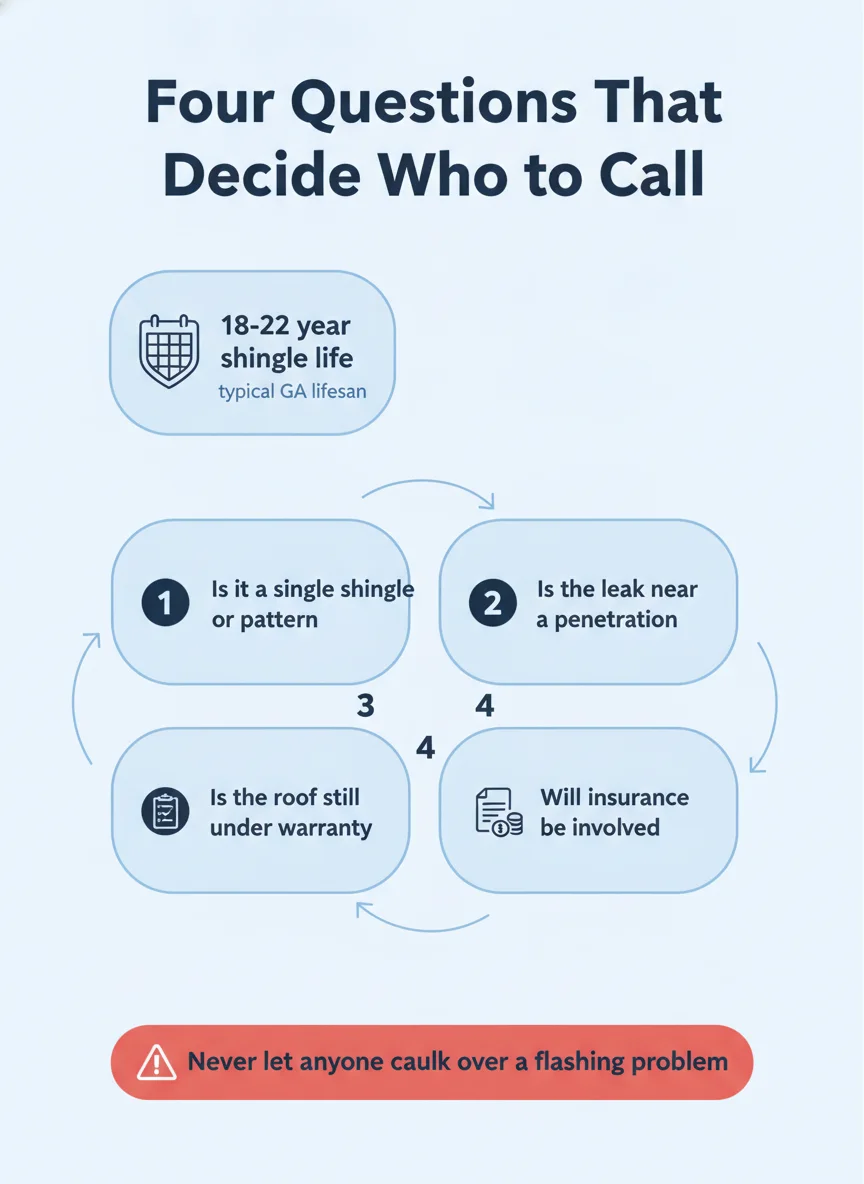
A quick walk-through of these questions before you pick up the phone will usually point you in the right direction without needing anyone on a ladder yet.
- Look from the ground: Scan the roof with binoculars for lifted, missing, or curled shingles, and note whether the damage is in one spot or spread out.
- Check for an interior stain: A ceiling or wall stain almost always means the water traveled, which points to a flashing or decking issue a handyman can't diagnose.
- Note the location: Damage near a chimney, skylight, vent, or valley is a flashing concern and should go to a roofer, not a general repair person.
- Check the roof's age and warranty: A roof still under a shingle manufacturer or workmanship warranty may require a licensed installer to keep that coverage intact.
- Consider insurance: If wind or hail might be involved, a roofer familiar with the claims process can document the damage the way an adjuster expects to see it.
- Get a second look: When in doubt, a free roof repair inspection from a roofing company settles the question faster than guessing.
What Goes Wrong When a Repair Is Handled Without Roofing Experience
Most of the trouble doesn't show up the day the work is done. It shows up months later, when the same spot leaks again, or a new stain appears nearby that wasn't there before. By then the original problem has usually gotten bigger and the fix costs more to correct.
Mismatched Materials and Voided Warranties
Using the wrong fastener pattern, the wrong underlayment, or shingles that don't match the existing roof's weight and profile can create a weak point exactly where the repair was supposed to strengthen things. On a roof still covered by a manufacturer warranty, work that doesn't follow the required installation steps can also affect that coverage.
This is one of the quieter costs of a handyman repair gone wrong. The homeowner doesn't find out the warranty was affected until they file a claim years later for an unrelated problem and discover the paperwork doesn't line up with what's actually on the roof.
Hidden Damage That Gets Missed
A surface-level patch can look perfectly fine while leaving damaged decking or wet insulation underneath untouched. Wood that's been wet for weeks or months can soften, and that softness doesn't go away just because the visible leak stopped. Left alone, it can lead to a sagging spot or worse down the line.
This is the kind of thing that often gets caught early when homeowners already have a sense of what signs to watch for between inspections. Catching it before it spreads is a lot cheaper than catching it after.
DIY vs Calling a Pro
Some roof-adjacent tasks are genuinely fine for a comfortable homeowner to handle, like clearing debris off a low roof, checking that vents aren't blocked, or doing a visual inspection with binoculars after a storm. None of that involves removing or replacing roofing materials, which is where the real risk starts.
Anything that involves walking on the roof itself carries a fall risk that isn't worth taking for a homeowner without the right footing and safety gear. Beyond the safety side, improperly weighted steps on shingles, especially older or brittle ones, can crack material that was otherwise fine, turning a non-repair into a repair.
The clearest line is this: ground-level checks and simple cleaning are reasonable DIY tasks. Anything that touches shingles, flashing, decking, or penetrations should go to a licensed roofer, both for the quality of the fix and for the insurance and warranty protection that comes with hiring someone qualified.
When to Just Make the Call
If there's any doubt about whether a repair is cosmetic or structural, the safer move is to have a roofer look at it before anyone starts working. A short inspection usually answers the question in a few minutes, and it costs far less than correcting a repair that was handled wrong the first time.
Homeowners anywhere from Newnan to the surrounding towns can run into the same small-but-not-simple repair questions, and Griffintegrity Roof & Remod is available to take a look before anyone climbs a ladder with the wrong tools.
Frequently asked questions
Can a handyman fix a small roof leak?
A handyman can often handle a simple, visible fix like resealing a single loose shingle or replacing a cracked vent boot on a low, easy-to-access roof. Once the leak involves flashing, a valley, or a spot you can't clearly identify from the ground, a licensed roofer is the safer call because the fix has to match the surrounding system, not just patch the symptom.
How do I know if a roof repair is actually a small job?
A repair is usually small if it's confined to one visible area, like a single lifted shingle or a loose piece of flashing, with no sign of water staining inside the home. If you see a ceiling stain, soft decking underfoot, or damage spread across more than one section of the roof, it's worth having a roofer look before anyone climbs up with a tube of sealant.
Will a handyman repair void my roof warranty?
It can, depending on the manufacturer and the type of warranty on the materials. Many shingle manufacturer warranties require installation and repair work to follow specific procedures, and using a non-licensed installer or the wrong materials can affect coverage, so it's worth checking your paperwork before you hire.
What's the risk of hiring the wrong person for a roof repair?
The biggest risk is a fix that looks fine from the ground but doesn't actually stop water from getting into the decking or walls. A surface patch over a flashing or valley problem can trap moisture instead of shedding it, so the damage keeps growing quietly until it shows up as a stain or soft spot somewhere else in the house.
Should I get a roofer's opinion even for a minor-looking repair?
It's a reasonable step if the damage is near a chimney, skylight, vent, or valley, since those are the spots where small leaks most often turn into bigger ones. A roofer can usually tell within a few minutes whether it's a simple fix or something that needs a closer look, and most inspections for this kind of question are free.