Why the shingle brand on your quote matters
Homeowners across Coweta County and the south Atlanta metro usually hear two or three brand names in a quote conversation and have no real way to tell them apart. That's understandable. The shingles all look similar stacked in a supply yard, and the marketing language on every wrapper sounds nearly identical: durable, weather-resistant, long-lasting. But the brand you pick does shape two things that matter for years after installation, what your manufacturer warranty actually covers, and how the shingle performs in wind and UV exposure specific to Georgia's climate.
This isn't about picking a winner. It's about knowing which questions to ask so a quote makes sense before you sign it. A shingle that performs well in a dry western climate test can behave differently after a decade of Georgia humidity, so the specs that matter locally are wind rating, algae resistance, and the structure of the warranty, not the brand name by itself.
What actually varies between the major manufacturers
The big four residential shingle makers, GAF, Owens Corning, CertainTeed, and Atlas, all sell three tiers: a basic three-tab line, a mid-range architectural (laminate) line, and a premium designer line meant to mimic slate or cedar shake. The tiers compete closely on price and general appearance. Where they actually separate is in the technical fine print most homeowners never read.
Wind and impact ratings
Every manufacturer tests its shingles to a wind speed rating, commonly in the 110 to 130 mph range depending on the line, and a smaller number of product lines carry a Class 4 impact rating, the highest level in the industry's hail resistance test. Not every architectural shingle in a manufacturer's catalog carries the top rating in either category, so two shingles that look identical on a sample board can carry different ratings underneath.
Wind rating is only as good as the installation behind it. A shingle rated for 130 mph winds that gets nailed with the wrong pattern or too few fasteners per shingle performs like a lower-rated product. That's part of why Roof Replacement & Installation quotes should always spell out the nailing spec along with the shingle line.
Warranty structure
Most manufacturer warranties split into a shorter full-coverage period, often the first several years, followed by a much longer prorated period that covers a shrinking percentage of material cost as the roof ages. The length and terms vary by product tier and by whether the installing contractor holds a manufacturer certification that unlocks an enhanced warranty.
This is where the installer matters as much as the brand. A certified installer can often register a stronger version of the same manufacturer's standard warranty, covering more years or adding labor coverage that the base warranty doesn't include. Always ask whether the quote includes a standard or enhanced warranty tier before comparing prices across contractors.
| Feature | What to ask about | Why it matters in Georgia |
|---|---|---|
| Wind rating | mph rating per product line | Georgia sees straight-line wind events and tropical remnants |
| Impact rating | Class 1 through Class 4 | Separates hail-resistant lines from standard shingles |
| Algae resistance | copper or zinc granule treatment | Humidity drives streaking faster in the Southeast |
| Warranty tier | standard vs. enhanced/certified contractor tier | Enhanced tiers often add labor coverage, not just material |
Understanding the shingle system, not just the shingle
A shingle is one layer of a roofing system that also includes underlayment, starter strip, ridge cap, and flashing. Manufacturer warranties increasingly require the full system, meaning the same brand's underlayment and starter products, to qualify for the strongest warranty tier. Mixing brands between the shingle and the underlayment can quietly void part of that coverage.
This system approach is also why two quotes with the same shingle name on them can still differ in real coverage. One contractor might install the full matched system and register it for the enhanced warranty, while another installs just the shingle over mismatched underlayment at a lower price. The sticker price difference usually explains itself once you compare what's actually included.
Step-by-step: how to compare two shingle quotes fairly
Side-by-side comparison only works if you're comparing the same information from each contractor. Use this order to keep it fair.
- Confirm the exact product line: Ask for the specific product name within the brand, not just the manufacturer, since tiers within one brand vary widely in rating and price.
- Check the wind rating: Compare the mph rating listed for that specific product line, not a general brand-wide claim.
- Ask about impact class: Confirm whether the line carries a Class 4 impact rating or a lower classification, since not all architectural shingles do.
- Confirm warranty tier: Ask whether the installer's certification unlocks an enhanced warranty and what additional coverage that includes.
- Compare system components: Check whether underlayment, starter strip, and ridge cap are the same brand as the shingle, which matters for warranty eligibility.
- Review algae treatment: Ask if the line includes copper or zinc granules for streak resistance, especially relevant in humid Southeast climates.
What you'll find once you dig into the specs
Price differences usually track features, not marketing
Once you line up wind rating, impact class, and warranty tier side by side, price gaps between brands and tiers usually make more sense. A line with a Class 4 rating and an enhanced warranty option typically costs more than a basic architectural line without either, and that gap reflects real material and testing differences, not just brand positioning.
Color and style choices rarely affect performance
Color blends and designer profiles are largely aesthetic and don't change the underlying wind or impact performance within a given product tier. It's reasonable to pick color first once you've settled on the performance tier that fits your home and budget, rather than starting the decision with color.
What a homeowner can research versus what needs a pro
Reading manufacturer spec sheets, comparing wind and impact ratings, and understanding warranty tiers are all things a homeowner can do from a laptop before ever calling a contractor. Most manufacturers publish this information publicly on their product pages, and it's worth doing that homework before the first estimate appointment.
What a homeowner generally can't verify alone is whether a given contractor actually holds the manufacturer certification needed to register the enhanced warranty, or whether the proposed installation meets the nailing and flashing spec that keeps the wind rating valid. Those require either checking with the manufacturer directly or trusting a licensed, insured roofing contractor to confirm it in writing.
It's also worth getting a second opinion if a quote seems unusually low for a top-tier product line, since that can signal a mismatched system or a non-certified install that won't carry the enhanced warranty the brand name implies. A quick comparison against Roof Repair or full replacement quotes from more than one licensed contractor usually clears that up fast.
Picking a shingle that fits your home, not just a brand
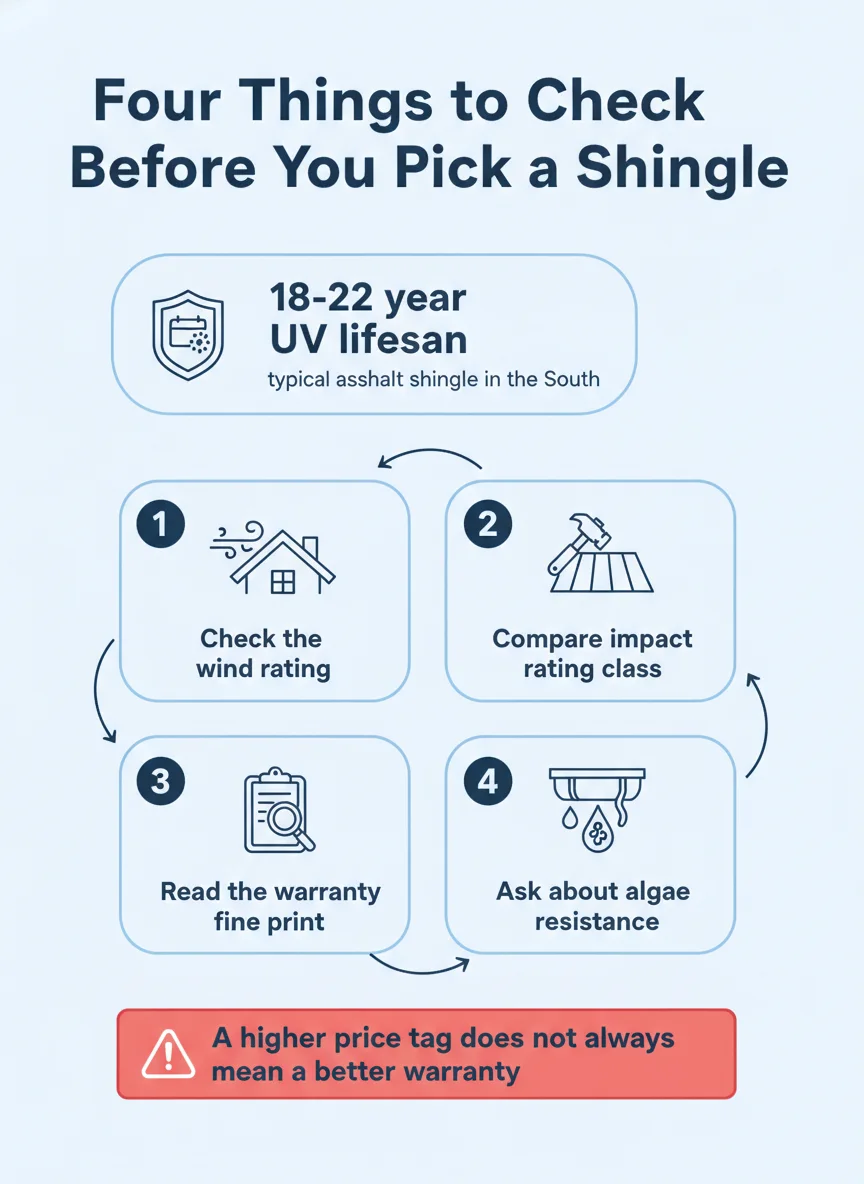
The brand name on the wrapper matters less than the specific product line, its wind and impact ratings, and the warranty tier that comes with a properly matched system and a certified installer. Once you know those four things, comparing quotes across manufacturers stops feeling like guesswork.
If you're weighing shingle brands for an upcoming project in the Newnan area and want the ratings explained against your actual roof, Griffintegrity Roof & Remod Inc can walk through the options line by line.
Frequently asked questions
Is one shingle brand better than another?
No single brand wins across every category. Each major manufacturer, GAF, Owens Corning, CertainTeed, and Atlas, makes a comparable range of three-tab, architectural, and designer lines, and the real differences show up in wind rating, warranty structure, and algae resistance, not in the logo on the wrapper.
What is the difference between a manufacturer warranty and a workmanship warranty?
A manufacturer warranty covers defects in the shingle material itself, while a workmanship warranty covers how the roof was installed. Both matter, because a shingle rated for high wind can still fail early if the nailing pattern or flashing work underneath it was done wrong.
Does a higher wind rating actually matter in Georgia?
Yes, Georgia sees straight-line wind events and occasional tropical remnants that can lift shingles rated for lower speeds. A shingle with a documented higher wind rating, properly installed per the manufacturer's nailing pattern, holds up better in those gusts than a budget line rated for less.
What does Class 4 impact resistant mean on a shingle?
Class 4 is the highest rating in the industry's impact resistance test, meaning the shingle resisted cracking under a standardized hail-sized steel ball drop. It's a separate rating from wind resistance, and not every line from every manufacturer carries it.
Why do some shingles get dark streaks and others don't?
Algae growth causes those streaks, and most major manufacturers now embed copper or zinc granules in at least one product line specifically to resist it. Older shingles or budget lines without that treatment streak faster in humid climates like Georgia's.