
Why Lifespan Matters More in Georgia Than the Brochure Suggests
Every roofing material sold in Georgia comes with a lifespan number printed somewhere on the package or the sales sheet. Those numbers get tested in a lab, not on a roof baking under Coweta County sun in July or soaking through a wet Georgia spring. Real-world lifespan depends on the material itself, how it was installed, and how the roof is ventilated underneath.
That gap between the lab number and the real number is exactly why this question comes up so often. A homeowner comparing materials for a roof replacement wants a straight answer, not a marketing claim. This guide breaks down what each major material actually does over time in a hot, humid climate like the one across Newnan and the surrounding towns.
Why Some Materials Outlast Others
At its core, roofing lifespan comes down to how a material handles three things: ultraviolet light, temperature swings, and moisture. Materials that resist all three without cracking, curling, or corroding simply stay functional longer. The construction of the material, how thick it is, and whether it is a single layer or a multi-layer product also plays a role.
Asphalt Shingles and UV Breakdown
Asphalt shingles are petroleum-based products coated with mineral granules. Over years of sun exposure, UV rays slowly break down the asphalt binder and the granules loosen and shed, which is why an aging shingle roof often looks grainy in the gutters or on the ground after a big wind. This process is gradual and expected; it is simply the nature of the material.
Georgia's combination of intense summer sun and humid air accelerates this breakdown compared to drier, cooler climates. A three-tab shingle generally wears out faster than a thicker architectural shingle because there's simply less material to break down before the underlying felt or deck is exposed.
Metal and Corrosion Resistance
Metal roofing doesn't break down from UV the way asphalt does. Its main enemy is moisture trapped against bare metal, which standing seam panels largely avoid through raised, interlocking seams that shed water instead of holding it. A factory-applied coating adds another layer of protection against rust and fading.
Because metal panels are a single, continuous material rather than overlapping pieces that age at different rates, a well-installed metal roof tends to fail less often from material fatigue and more often from fastener issues or coating wear decades down the road, which is one reason it carries the longest lifespan of the common residential options.
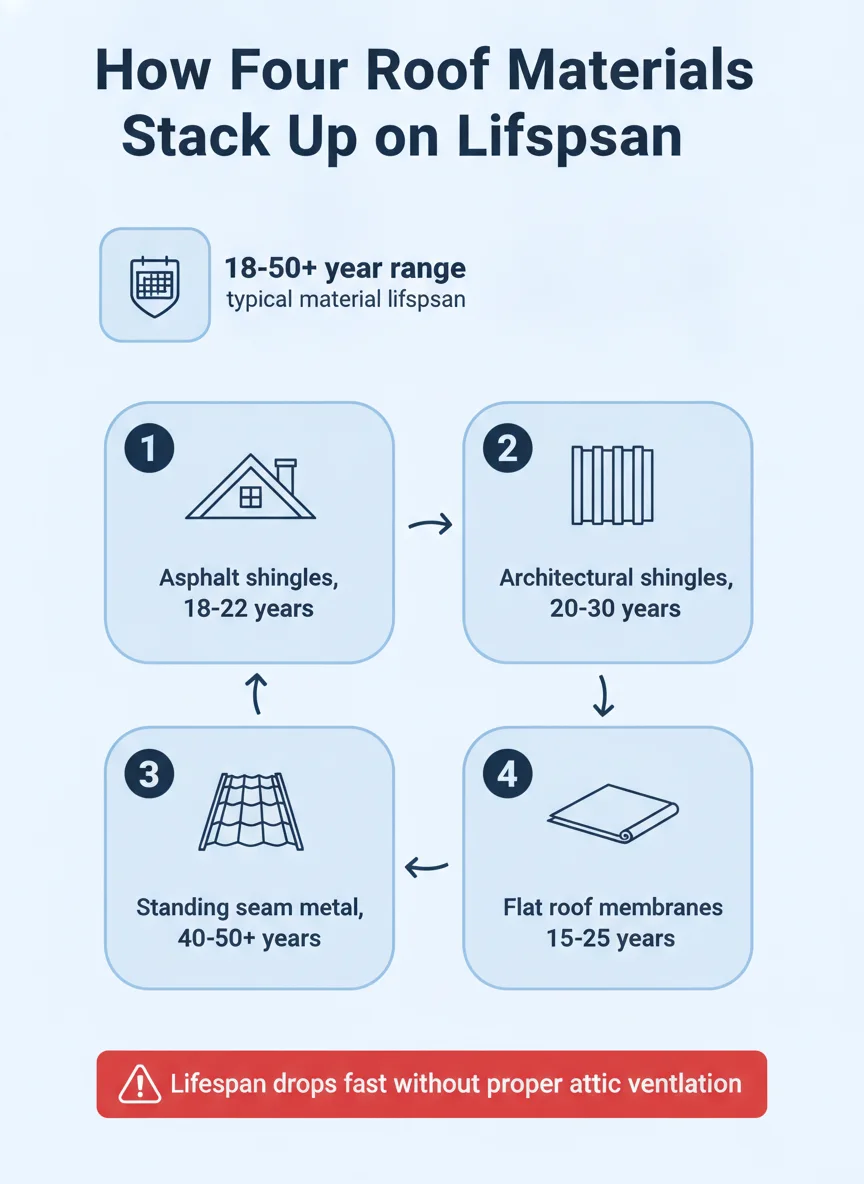
| Material | Typical Lifespan | Main Wear Factor |
|---|---|---|
| Three-tab asphalt shingles | 18-22 years | UV breakdown of granules and binder |
| Architectural asphalt shingles | 20-30 years | UV breakdown, slower due to thicker profile |
| Standing seam metal | 40-50+ years | Fastener and coating wear over decades |
| Flat membranes (TPO/EPDM/modified bitumen) | 15-25 years | Ponding water and seam wear |
What's Actually Happening Underneath the Surface Material
The visible layer, whether shingle, panel, or membrane, only tells part of the story. Underneath it sits an underlayment that acts as a secondary water barrier, and below that, roof decking that the whole system is fastened to. Attic ventilation moves hot, moist air out from under the surface material, which matters just as much as the material choice itself.
A premium shingle installed over a poorly ventilated attic will age faster than a mid-grade shingle installed with proper intake and exhaust ventilation. This is the detail that separates a roof that hits its full rated lifespan from one that needs attention years early, regardless of which material sits on top.
Step-by-Step: How to Judge Which Material Fits Your Home
Choosing a material isn't just about the longest number on the lifespan chart. Here's a practical way to work through the decision.
- Set a time horizon: Decide roughly how long you plan to stay in the home, since a 40-year metal roof may outlive your ownership while a 20-year shingle roof matches a shorter horizon.
- Check your roof's pitch: Steeper roofs shed water faster and are well suited to shingles or metal, while low-slope or flat sections typically call for a membrane system instead.
- Look at the current ventilation: An attic with poor airflow shortens the life of almost any material, so this is worth addressing regardless of what goes on top.
- Weigh upfront cost against replacements: A cheaper material replaced twice over 40 years can cost more in total disruption than one longer-lasting install, even if the sticker price is higher.
- Match the material to your climate exposure: Homes with heavy tree cover, lots of direct sun, or history of high winds each favor slightly different material strengths.
- Get it inspected before deciding: A roof repair visit or a full inspection can tell you whether your current deck and ventilation are ready to support a long-lifespan material.
What You'll Actually See as a Material Ages
Knowing what aging looks like helps you catch problems before they become expensive ones. Each material telegraphs its wear differently, which is useful to know whether you're watching your own roof or evaluating a home you're about to buy.
Signs an Asphalt Shingle Roof Is Nearing the End
Curling or cupping shingle edges, bald patches where granules have worn away, and shingles that look faded or inconsistent in color are the classic signs. Cracked shingles after a windstorm, discussed in more detail in our post on missing shingles after a windstorm, can also signal that the material has become brittle with age rather than just storm damage alone.
Granules collecting in gutters or at the base of downspouts are often the earliest visible warning. On their own, a few loose granules aren't alarming, but a steady accumulation over a season is worth a closer look.
Signs a Metal or Flat Roof Is Aging
On metal roofing, watch for chalking or fading coatings, loose or backed-out fasteners, and rust spots forming around screw heads or seams. These are maintenance items more often than full-replacement triggers, which is part of why metal's practical lifespan runs so long.
Flat membrane roofs show age through seam separation, ponding water that doesn't drain within a day or two, and surface cracking or blistering. Because these systems are often found on additions, porches, or commercial buildings, catching these signs early avoids interior water damage that's harder to reach than on a pitched roof.
What You Can Check Yourself vs. What Needs a Licensed Roofer
From the ground, a homeowner can reasonably check for sagging roof lines, obviously missing or curled shingles, granules piling up in gutters, and daylight or water stains in the attic. Binoculars make this easier and safer than climbing onto the roof itself, which isn't necessary for a basic visual check.
Anything involving walking the roof surface, checking flashing around chimneys and vents, or evaluating deck condition underneath the material should go to a licensed roofer. These areas require both safety equipment and trained eyes to catch problems that aren't visible from a ladder or the ground.
Attic ventilation assessment also belongs with a professional, since it involves understanding airflow patterns and intake-to-exhaust balance that directly affect how long whatever material you choose will actually last. Getting this evaluated alongside a material decision prevents paying for a long-lifespan product that underperforms due to a ventilation problem no one addressed.
Making the Call for Your Home
There's no single material that's right for every home across Coweta County and the towns around it. The right choice balances how long you'll own the home, your roof's pitch and current condition, and how much upfront cost versus long-term replacement frequency makes sense for your situation.
An on-site look at your current roof, deck, and ventilation gives a far more useful answer than any lifespan chart alone, since every attic and every roof plane is a little different. Griffintegrity Roof & Remod walks homeowners through that comparison on-site before any decision gets made.
Frequently asked questions
What roofing material lasts the longest?
Standing seam metal roofing typically lasts the longest of the common residential materials, often 40 to 50 years or more with basic maintenance. Architectural asphalt shingles come in second, usually landing in the 20 to 30 year range depending on climate and ventilation.
Is metal roofing worth it over asphalt shingles?
It depends on how long you plan to own the home and what you value most. Metal costs more upfront but needs fewer replacements over a homeowner's lifetime, while asphalt shingles are the more familiar, lower-upfront-cost option that still performs well when installed correctly.
Do flat roofs last as long as pitched roofs?
Generally no. Flat roof membranes like TPO, EPDM, and modified bitumen tend to run 15 to 25 years, shorter than a well-installed shingle or metal roof, mainly because flat surfaces hold water and UV exposure longer.
Does the color of a roof affect how long it lasts?
Lighter colors reflect more heat and can modestly reduce attic temperatures, which helps shingles age a bit slower in hot climates. The effect is real but secondary to bigger factors like ventilation, installation quality, and material grade.
What shortens a roof's lifespan the most?
Poor attic ventilation, skipped maintenance, and improper installation are the biggest lifespan killers, often cutting years off a roof regardless of material. A roof installed well and left alone to do its job usually gets close to its full rated life.